The Downfall of Irish Whiskey: History of a Vanished Empire
How Irish whiskey fell from the world's dominant spirit to near extinction in the 20th century: the Coffey still, Phylloxera, Prohibition and trade wars.
For much of the 19th century, Irish whiskey was the leading whiskey in the British and American markets. In London and New York, Dublin pot still whiskey was widely treated as the benchmark. The great Dublin distilleries (John Jameson, William Jameson, John Power & Son, and George Roe & Co.) were among the largest industrial distilleries in the British Isles (Truths About Whisky, 1878).
Yet by the late 1970s, an entire distilling nation had been reduced to just two operating distilleries: Bushmills in County Antrim and the new Midleton distillery in County Cork, opened in 1975 (Kennetpans history).
The catastrophic collapse of Irish whiskey was not driven by poor quality or changing tastes alone, but by a perfect storm of technological conservatism, war, prohibition, and geopolitical conflict.
1. The Coffey Still and the Corn Laws (1830–1846)
Ironically, the technology that would eventually enable Scottish blenders to overtake Irish whiskey was refined by an Irishman: Aeneas Coffey, a former excise officer in Ireland who ended his excise career as a surveying general examiner. In 1830, Coffey was granted a patent (No 5974, dated 5 August 1830) for his continuous two-column still (Woodcroft’s chronological index of patents), building on earlier continuous designs such as Robert Stein’s (scotchwhisky.com).
The Coffey still could run continuously around the clock, producing vast volumes of high-strength, neutral grain spirit with remarkable thermal efficiency and minimal labour. In contrast, the big Dublin distillers remained fiercely committed to traditional batch distillation in massive copper pot stills (Difford’s Guide).
In 1846, the British government repealed the protectionist Corn Laws, opening British ports to cheap imported maize and grain (Difford’s Guide). Scottish entrepreneurs rapidly adopted the Coffey still to distil this inexpensive grain into light spirit, which they married with Highland malts to create lighter, cheaper and more consistent blended Scotch.
Irish distillers dismissed the grain spirit in these early blends as “silent spirit”, refusing to dilute their heavy, spiced pure pot still whiskey (made from a traditional mash of malted and unmalted barley). In 1878, the major Dublin distillers even published a joint manifesto, Truths About Whisky, attacking grain spirit as an industrial counterfeit (Clackmannanshire history). But consumers loved the consistency and lower price of Scottish blends.
2. The Phylloxera Crisis and the London Boom
In the late 19th century, phylloxera, a tiny aphid-like insect, devastated European vineyards and cut supplies of French wine and Cognac; it reached the Cognac region around 1875 and destroyed most of its vines (BNIC). British drinkers who had favoured brandy looked for an alternative.
Scottish blenders seized the opportunity with energetic marketing and distribution networks in London. Backed by the grain distillers of the Distillers Company Limited (DCL), formed in 1877 (Clackmannanshire history), Scotch whisky rapidly conquered the British Empire’s military messes, gentlemen’s clubs, and overseas colonial markets.
In 1909, the death blow to Ireland’s legal campaign arrived. A British Royal Commission appointed to rule on “What is Whisky?” concluded that spirit produced from continuous column stills using grain was entitled to be sold under the name “whisky” on equal legal footing with pot still spirit (Difford’s Guide); the report offered “no condemnation of the patent-still” (The Spectator, 14 August 1909). The commercial floodgates were opened permanently.
3. War, Prohibition, and the Great Depression
If technological competition weakened Irish whiskey, the early 20th century shattered it completely:
- The First World War (1914–1918): Wartime shortages of grain and coal sharply curtailed distilling across Ireland (GreatDrams).
- American Prohibition (1920–1933): The United States had been one of Ireland’s most lucrative export markets. Legal exports there stopped (Difford’s Guide).
- The Anglo-Irish Trade War (1932–1938): Following the Irish War of Independence and the founding of the Irish Free State, a bitter economic dispute erupted with the British government, lasting until the Anglo-Irish Trade Agreement of April 1938 (Irish Farmers Journal). Britain imposed special duties on Irish imports, starting at 20% in July 1932 (Hansard, 16 May 1933), and Irish whiskey lost much of its access to British and Commonwealth markets, which Scotch blenders filled.
4. Consolidation and Survival
By the 1960s, Ireland’s remaining heritage distillers were bleeding cash and facing complete collapse. In 1966, the three surviving independent producers in the Republic (John Power & Son, John Jameson & Son, and the Cork Distilleries Company) agreed to merge, forming Irish Distillers (IDL) (Difford’s Guide).
Bushmills, the only other working whiskey distillery on the island, joined the group in 1972 (GreatDrams). Jameson had stopped distilling at Bow Street in 1971 and moved production to Power’s John’s Lane distillery in Dublin until the new Midleton distillery opened in 1975 (Kennetpans history). Once the Coleraine distillery, also owned by the group, closed in 1978 (Old and Rare Whisky), virtually all Irish whiskey came from two sites, both owned by Irish Distillers.
The Modern Revival
The survival of Irish whiskey during its darkest decades laid the groundwork for its revival, told in our companion piece, The Rise of Irish Whiskey. Led by the global growth of Jameson, renewed interest in single pot still whiskey (like Redbreast and Green Spot), and a wave of new distilleries, the island now has 50 operational Irish whiskey distilleries, up from four in 2010 (Drinks Ireland). Global sales rose from under 5 million cases in 2010 (Irish Whiskey Association) to a record 16.2 million nine-litre cases in 2024, the association reports, although sales in the USA, its largest market, dipped slightly that year and a 15% US tariff applied from 2025 (Drinks Intel).
Explore Irish Whiskey Prices
New to the category? Our Irish whiskey for beginners guide explains the four legal styles. Compare UK prices on single pot still, single malt and blended Irish whiskeys across the retailers we check:
Compare UK prices on Irish Whiskey
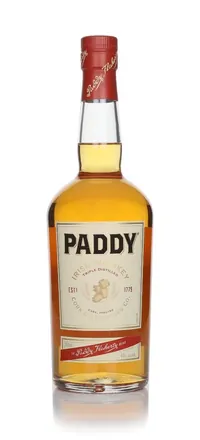
Paddy Blended Irish Whisky 40% 70cl
40.0% ABV · 70cl
from £21.24 shelf price 1 retailer
£26.19 delivered
Compare prices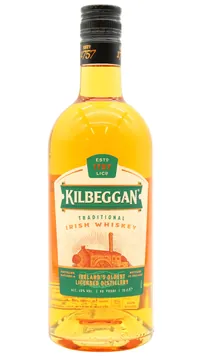
Kilbeggan Traditional
40.0% ABV · 70cl
from £21.50 shelf price 4 retailers
£26.45 delivered
Price gap up to £6.45
Compare prices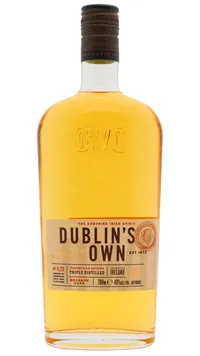
Dublin's Own Irish Blended Whiskey
70cl
from £22.50 shelf price 2 retailers
£27.45 delivered
Price gap up to £7.45
Compare prices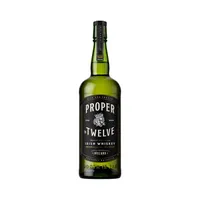
Proper No. Twelve (12)
40.0% ABV · 70cl
from £23.00 shelf price 2 retailers
£27.99 delivered
Compare prices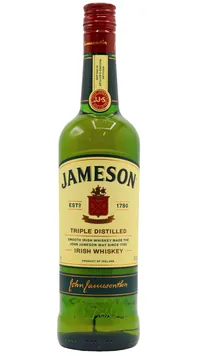
Jameson Irish Whiskey
40.0% ABV · 70cl
from £23.40 shelf price 4 retailers
£28.35 delivered
Price gap up to £4.55
Compare prices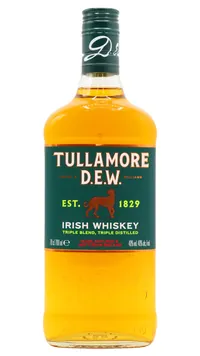
Tullamore DEW
40.0% ABV · 70cl
from £24.09 shelf price 4 retailers
£29.04 delivered
Price gap up to £2.91
Compare pricesSources and review
About the author
