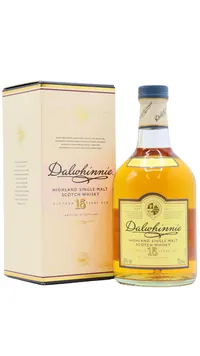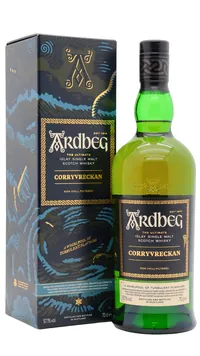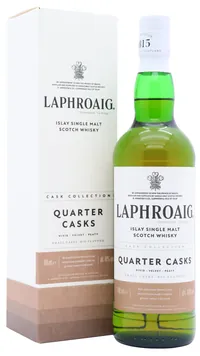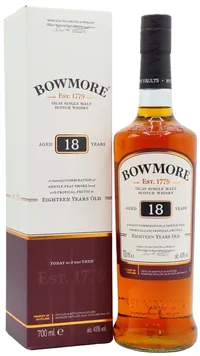
Whisky from Scotland

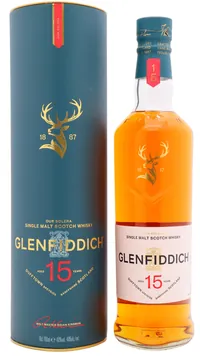
Scotch whisky is distilled and matured in Scotland for at least three years in oak casks and bottled at 40% ABV or more; nothing may be added but water and plain caramel colouring. This page compares every Scotch we track, from blends such as Johnnie Walker to single malts from Glenfiddich, Glenmorangie, Ardbeg and Talisker.
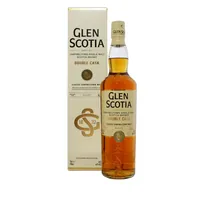
Read moreShow less

The range is too wide to browse flat, so narrow it by region: Islay, Speyside, the Highlands, Lowland, Campbeltown or the Islands. You can also browse by style: single malt comes from one distillery, while blended Scotch combines malt and grain whiskies and blended malt combines single malts from more than one distillery. Miniatures sit in the grid too, so compare like sizes. For one or two picks from each region and category, see best Scotch whisky.

2070 bottles in stock, plus 48 under 50cl.

Scotch whisky by region

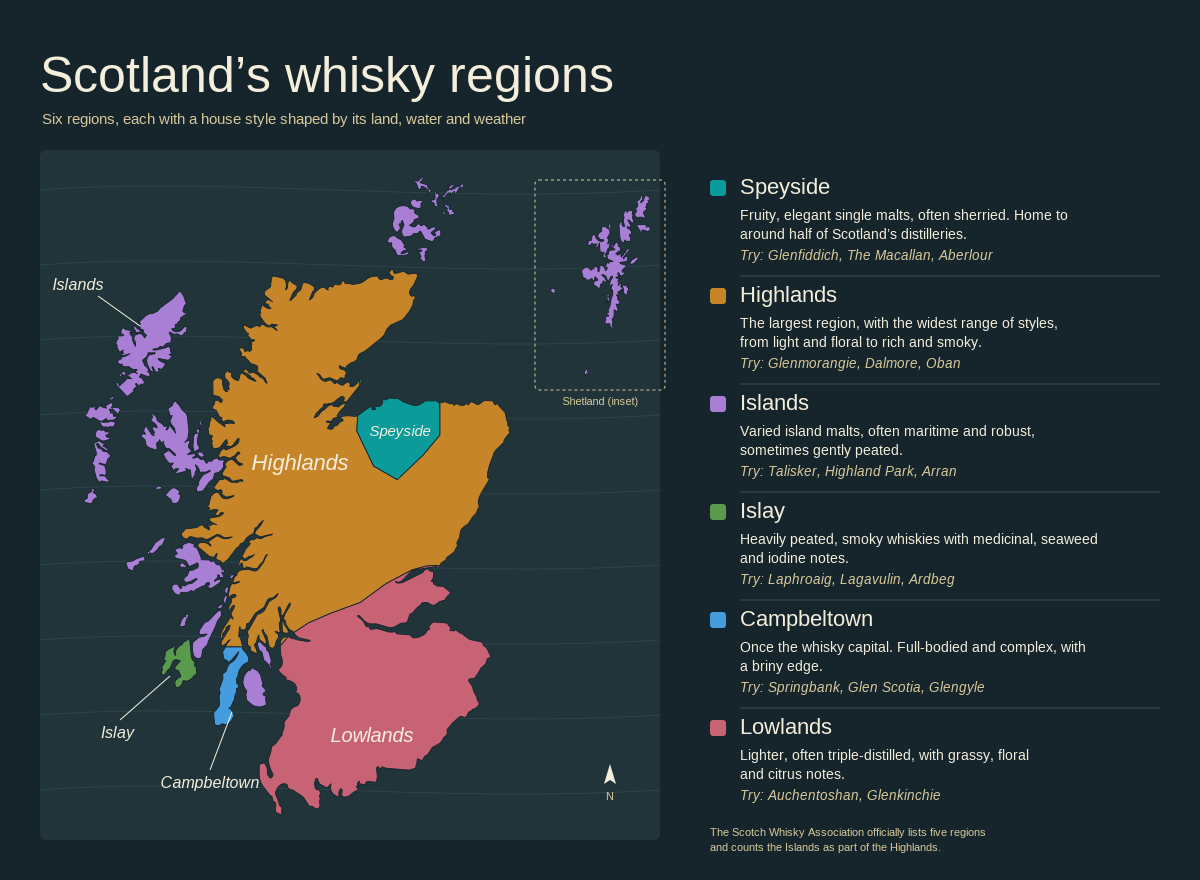
Map of Scotland's whisky regions, each region in its own colour
Open the map to zoom in, then pick a region on it.

Questions

What is the cheapest whisky from Scotland?

The cheapest whisky from Scotland is Scottish Leader 50cl (40% ABV, 50cl), at £13.00 from The Whisky Shop. That is £17.99 delivered to the UK mainland for one bottle. Next cheapest: Bell’s Original Blended Scotch Whisky (£18.99) and Black Bottle Blended Scotch Whisky (£19.00).

How much does whisky from Scotland cost?

Whisky from Scotland costs from £13.00 to £24,500.00, with a median of £108.99 for a full-size bottle (50cl to 1 litre). The dearest is Glen Grant 1948 (cask 1365) King Charles III Coronation Release Single Malt Whisky.

What is the oldest whisky from Scotland you can buy?

Which Scotch whisky regions are protected by law?

Five names are protected by regulation 10 of the Scotch Whisky Regulations 2009: two localities, Campbeltown and Islay, and three regions, Highland, Lowland and Speyside. Campbeltown is defined as the South Kintyre council ward, Islay as the island itself, and Speyside as a set of Moray and Highland Council wards. “Islands” is not one of the protected names.

What makes a whisky Scotch?

Under the Scotch Whisky Regulations 2009 it must be distilled at a Scottish distillery from water and malted barley (other whole cereals may be added), at below 94.8% ABV. It must then mature only in Scotland, in oak casks of no more than 700 litres, for at least three years, and be bottled at 40% ABV or more. Only water and plain caramel colouring may be added.

What are the five categories of Scotch whisky?

Single Malt, Single Grain, Blended Malt, Blended Grain and Blended Scotch Whisky. A single malt is made only from malted barley in pot stills at one distillery. A blended malt mixes single malts from more than one distillery, and a blended Scotch combines malt and grain whiskies.

How many whisky distilleries are there in Scotland?

As of September 2026, the Scotch Whisky Association counts 156 operating Scotch whisky distilleries. About 22 million casks are maturing in Scottish warehouses. The count changes every year as new distilleries open and others fall silent.

What does 'single' mean on a bottle of Scotch?

It means the whisky was distilled at a single distillery, not that it came from one cask. The Scotch Whisky Regulations 2009 use the word for two of the five categories. Single malt Scotch Whisky is made at one distillery from water and malted barley only, in pot stills. Single grain Scotch Whisky is also made at one distillery, but it may use other cereals such as wheat or maize and is usually distilled in column stills; Haig Club, from Diageo’s Cameronbridge distillery in Fife, is one. Most single malts and single grains are still a mix of many casks from that distillery. Whisky from just one cask is sold as a single cask bottling, a term the regulations do not define.

What is a dram in Scotland?

A dram is a small serving of strong drink, especially whisky, with no fixed size; the Cambridge Dictionary marks the word as mainly Scottish English. The name is also an old British unit. Schedule 1 of the Weights and Measures Act 1985 lists the dram as a sixteenth of an ounce and the fluid drachm as an eighth of a fluid ounce, about 3.55ml. In a British pub the measure is set by law instead. The Weights and Measures (Intoxicating Liquor) Order 1988 says gin, rum, vodka and whisky sold by the glass must be served in one quantity, or multiples of it, shown on a notice, and the metric quantities it allows are 25ml and 35ml. So a dram at a bar is one of those, and at home it is whatever the host pours. Our guide to whisky measures and bottle sizes covers serving sizes.