On this page
NEAT glass: accidental prototype and flared-rim design
The NEAT glass's development history, rounded bowl and flared rim, and how to use its distinctive shape for nosing and sipping.
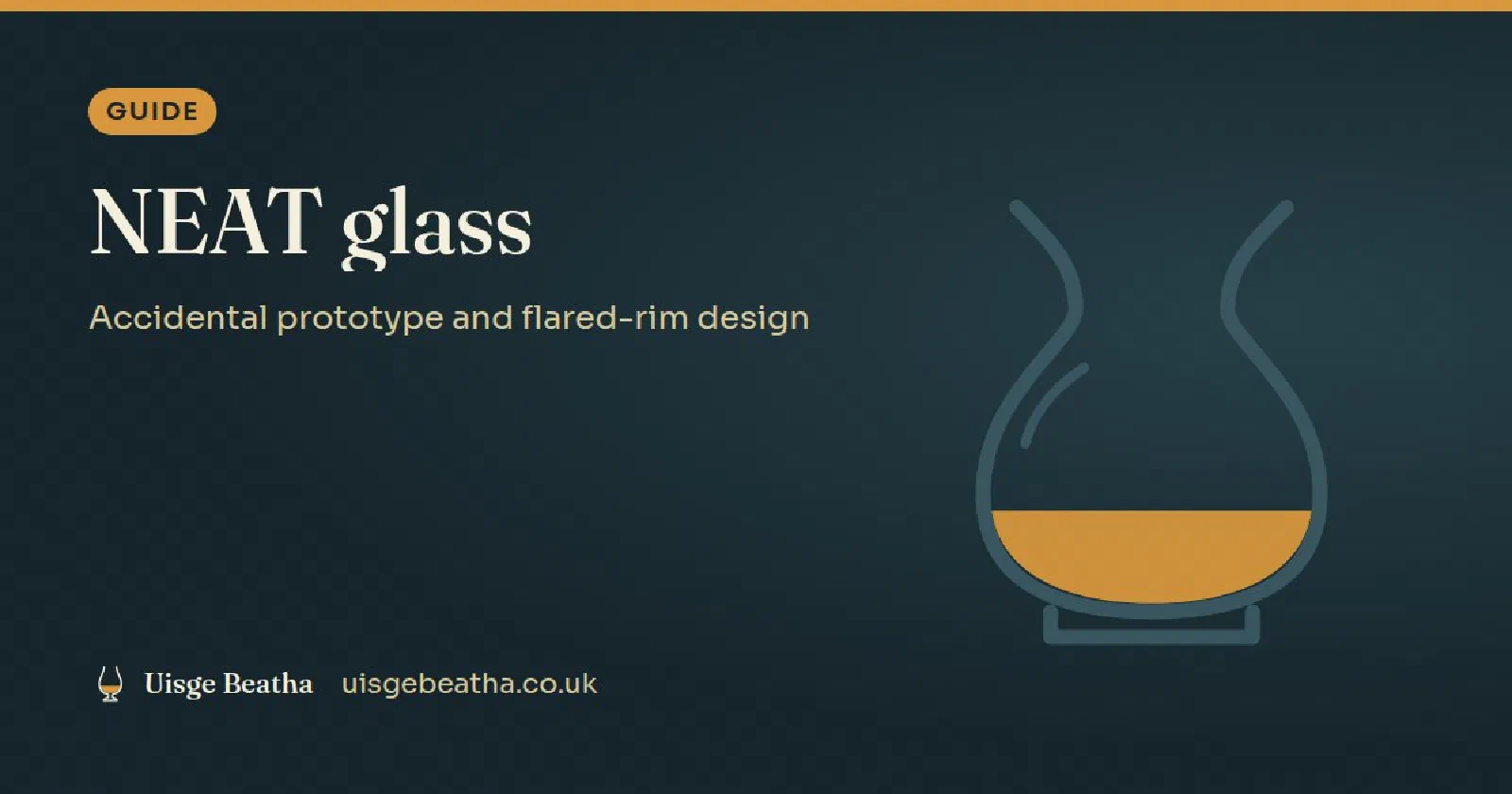
The NEAT glass is a proprietary spirits glass with a rounded bowl, a narrowed waist and a broad flared rim. Its maker expands NEAT as Naturally Engineered Aroma Technology and says the design reduces alcohol burn while making a spirit’s aromas easier to perceive. Those effects are product claims rather than a universal result that every drinker should expect.
The design has a more specific history than its name suggests. On its own history, the maker dates the original glass-blowing accident to 2002 and describes nine years of development, 52 design revisions and hundreds of tastings before release.
From workshop accident to design patent
A 2012 University of Nevada, Las Vegas account identifies George Manska as the inventor and tells the same broad origin story: he used a vessel made in a glass-blowing class and became interested in why the experience differed from his usual scotch glass.
The US design patent USD663165S1 names George Frederich Manska and Christine Renea Crnek and was published in July 2012. Its claim concerns the ornamental design of a vessel for nosing, tasting and drinking spirits. A patent for that design is not proof of a sensory effect.
The UNLV article also describes early laboratory comparisons using solid-phase microextraction and gas chromatography-mass spectrometry to examine vapours above different glasses. Crucially, it quotes Manska acknowledging that further testing was needed to substantiate his belief that NEAT was superior to traditional glasses. Those early comparisons did not establish universal superiority over other glasses.
The shape

The flared lip is the clearest visual departure from a tulip-shaped tasting glass. A copita or Glencairn closes in towards its opening; NEAT narrows around the middle and then opens out again. Its lower bowl remains broad, while the rim offers a much wider area to approach with the nose.
The maker attributes its claimed separation of alcohol vapour from other aromas to the interaction of the bowl, neck and flare. Try the same whisky in NEAT and a narrower glass to see which nosing experience you prefer.
Using the design
Pour a small neat measure and leave room above it. Begin with a gentle smell rather than a deep inhalation, then sip and decide whether the wide rim suits you. Add water gradually if that is part of your usual tasting routine.
If you want to compare it with a glass you already own, keep the whisky and approximate pour consistent. This can tell you which handling and nosing experience you prefer. Our guide to the importance of the whisky glass places NEAT among the other shapes.
NEAT is intended for spirits served without a long mixer or a glass full of ice. If you prefer a more enclosed opening and a different grip, the Glencairn is a useful contrast rather than a lesser alternative.
Follow the maker’s washing instructions for the particular version you own. For hand washing, use warm water, mild detergent and a soft cloth, rinse thoroughly and dry without putting pressure on the rim. Store the glass upright with room around its wide lip.
My verdict
I bought the NEAT glass out of curiosity and for completeness. It is beautiful and a step up from a tumbler, but it is not one I would recommend for everyday drinking. Although less expensive than a Norlan, it cost me nearly twice the price of a Glencairn without giving me anything extra.
Sources and review
About the author
