On this page
Buying whisky at auction vs retail: when to bid or buy
What a UK whisky auction lot really costs once commission, VAT and delivery are added, and when that beats the shop price for the same bottle.
Online auctions have become a regular way to buy whisky, not only for collectors after one bottle but for drinkers looking for discontinued releases, single casks, or a lower price on an everyday malt. The hammer price is only part of the bill, though, and for a single standard bottle the extras can take away most of the difference.
What you pay on top of the hammer price
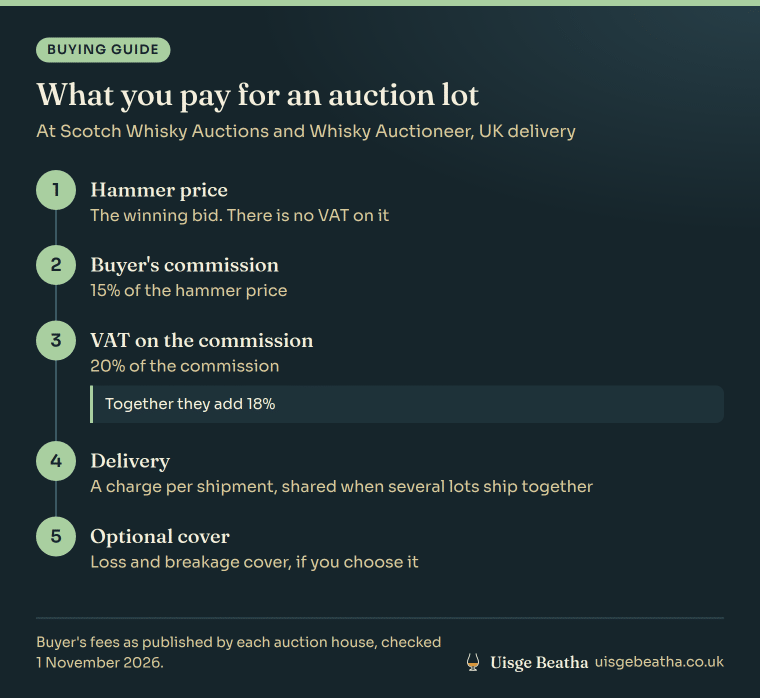
Scotch Whisky Auctions and Whisky Auctioneer charge buyers the same way (fees as published by each house, checked 1 November 2026):
- Hammer price: the winning bid. There is no VAT on it.
- Buyer’s commission: 15% of the hammer price.
- VAT on the commission: 20% of the commission, so the commission and its VAT together add 18% to the hammer price.
- Delivery: £13.20 for one bottle within the UK, at both houses. Scotch Whisky Auctions charges £25.20 for six bottles sent together.
- Optional cover: loss and breakage cover, which Whisky Auctioneer prices at 4% of the hammer price.
Whisky Auctioneer also charges a one-off £5 registration fee. Both are as published by each house on 1 November 2026.
So a lot that sells for £35 costs about £54.50 delivered: £35, plus £6.30 in commission and VAT, plus £13.20 delivery.
Everyday bottles: auction against shop
Each median comes from at least 5 sold lots of that exact bottling; the lot count and the months they sold in are under each figure. Half the lots sold for more than the median, and the delivered figures are for one bottle, so several lots shipped together cost less each.
| Bottle | Median hammer | At auction, delivered | Lowest in shops, delivered | Difference |
|---|---|---|---|---|
| Balvenie 12 Year Old DoubleWood | £35.00 154 lots, November 2024 to October 2026 | £54.50 | £55.23 Master of Malt, checked | £0.73 less at auction |
| Glenfiddich 12 Year Old | £25.00 217 lots, November 2024 to October 2026 | £42.70 | £42.45 Master of Malt, checked | £0.25 less in shops |
Median hammer price of sold lots at Scotch Whisky Auctions and Whisky Auctioneer from November 2024 to October 2026; half the lots sold for more. "At auction, delivered" adds 15% buyer's commission, VAT on the commission and £13.20 UK delivery for one bottle (fees checked 1 November 2026). Shop prices include the retailer's standard delivery for one bottle.
What the auction figure includes
- Hammer price: the winning bid. Our median is the middle hammer price of sold lots, so half sold for more and half for less.
- Buyer's premium: 15% commission on the hammer price, plus 20% VAT on that commission; there is no VAT on the hammer price itself.
- Delivery: £13.20 for one bottle to a UK address, or £25.20 for six bottles at Scotch Whisky Auctions, so the cost per bottle falls when lots ship together.
- Optional cover: Whisky Auctioneer offers breakage cover at 4% of the hammer price and charges a one-off £5.00 registration fee before VAT. Neither is in our figure.
Fees from each house's own published pages, checked 1 November 2026. Houses change their fees, so check before bidding.
For a single bottle of a core-range malt, the gap is often small either way, because delivery is a large share of a low lot price. The table shows today’s figures, bottle by bottle. The auction side gets cheaper per bottle when you win several lots in one auction and they ship together, since the delivery charge is shared. It also matters that a median is the middle result: half of the lots sold for more.
Where auctions are the only route
Some whisky is simply not in shops any more, and auction is the main place to find it. Three kinds come up again and again:
- Discontinued age statements. When a distillery drops an age from its range, the last bottles sell out and the shops have no more.
- Single casks and older independent bottlings. A single cask usually fills a few hundred bottles, and once they have sold there are no more of that release.
- Bottles from closed distilleries. Whatever was bottled before a distillery closed is all there will ever be.
Some examples, with what they sold for at auction over November 2024 to October 2026:
On smaller screens, scroll sideways to see every column.
| Bottle | Kind | Lots sold | Median hammer |
|---|---|---|---|
| Pittyvaich Flora & Fauna 12 Year Old (43%) | Closed distillery (closed 1993) | 37 | £140 |
| Littlemill 12 Year Old (40%) | Closed distillery (closed 1994) | 35 | £130 |
| St. Magdalene 1979 Rare Malts Selection 19 Year Old (63.8%) | Closed distillery (closed 1983) | 22 | £830 |
| Daftmill 2011 Single Cask #110 for Berry Bros & Rudd (59.7%) | Single cask | 16 | £145 |
| Bunnahabhain 1979 Lombard Jewels of Scotland (50%) | Older independent bottling | 35 | £190 |
| Lochside 1991 Connoisseurs Choice (43%) | Older independent bottling, closed distillery | 23 | £160 |
Median hammer price of sold lots at Scotch Whisky Auctions and Whisky Auctioneer, before commission, VAT and delivery.
For some malts the independent bottlings are most of what there is to buy: at least 85% of the Glenburgie and 70% of the Linkwood sold at these two houses carries an independent bottler’s label, as our study of the workhorse malts and independent bottlers shows.
Allocated releases
Some releases are sent to shops in small numbers and sell out at the price the distillery sets. When they turn up later on general retail sites, the asking price can be well above that first price. Before comparing a shop listing with an auction result, check that it is the same bottling: a single-cask or special release carries a different price from the standard bottling of the same age.
Springbank 10 is a useful reference. The standard 70cl bottling sold 729 times at auction over November 2024 to October 2026, with a median hammer price of £55, which came to about £78.10 delivered for one bottle once commission, VAT and delivery are added.
Two more things to check before you bid. Auction medians for many brands peaked in 2021 or 2022 and have fallen since, so an old result can overstate what a bottle sells for now: see what 1.6 million auction lots show about whisky prices. And cask type moves the price on its own, with a typical sherry cask lot selling for about one and a half times a bourbon cask lot of the same age, as the sherry cask auction premium sets out.
Sources and review
Questions
What is added to the hammer price at a UK whisky auction?
Is it cheaper to buy an everyday malt at auction than in a shop?
About the author
