On this page
Chill filtration in whisky: the NCF debate
What chill filtration removes, why non-chill-filtered whisky can turn hazy with ice or water, what the Scotch rules allow, and which distilleries skip it.
Chill filtration removes the material that can make whisky turn hazy when it gets cold. A bottle labelled “non-chill filtered” (or “NCF”) has skipped that step, but it has still been filtered: all Scotch is filtered before bottling to remove particles of wood. If you add ice or cold water to an NCF whisky and it clouds, nothing has gone wrong.
What actually is chill filtration?
The UK government’s Scotch Whisky technical file sets out the process. All Scotch is filtered before bottling to remove wood particles from the cask. It is also common, but not universal, for Scotch to be chill filtered: the whisky is filtered at a particular temperature to remove what the industry calls haze floc. At low temperatures certain long-chain esters in whisky can come out of solution and form a haze or sediment in the bottle; removing them keeps the whisky clear when the temperature changes.
The exact temperatures, filter media and pressures vary by producer and aren’t usually published.
Why do distilleries do it?
Appearance. The technical file says most consumers expect Scotch to be clear and bright, which is why many Scotch whiskies are chill filtered. It also notes that a haze can appear on storage below about 0°C, and in some Scotch whiskies after mixing with water or ice.
The technical file also sets the limit. The filtration must be used only to prevent haze floc and go no further, and it must not be used to remove colour, flavour or aroma, which the file says the definition of Scotch Whisky prohibits. That definition, in regulation 3 of the Scotch Whisky Regulations 2009, requires Scotch to retain the colour, aroma and taste derived from its raw materials, production and maturation.
Strength and haze: is there a 46% rule?
Not in law, but there is a rule of thumb. Haze is unlikely at about 46% ABV and above: Annandale Distillery gives about 46% as the point below which the haze-forming fatty acids and esters start to come out of solution, and the scotchwhisky.com professor says that raising the strength to about 46% should stop haze forming at full strength. That is why many non-chill filtered whiskies are bottled at 46% ABV or higher. It is not a guarantee: cold makes haze more likely, and adding water or ice lowers the strength, so a 46% whisky can still cloud in the glass. Scotch can’t be bottled below 40% ABV (regulation 3(1)(i)). Read the label: whether a whisky is chill filtered is a statement the producer makes, not something you can infer from its ABV.
Non-chill filtered whiskies are often bottled at natural colour too, but the two are separate choices, so check for each statement on the label. Our guide to spirit caramel (E150a) covers the colour side.
The sensory debate: flavour vs mouthfeel
Many drinkers and producers who skip chill filtration say it affects texture and finish. The evidence for a difference people can taste is thin. In one retailer’s published blind tasting study, 111 participants tasted chill-filtered and non-chill-filtered versions of the same single malts and identified the chill-filtered sample correctly 45% of the time, about what guessing would give. One study doesn’t settle the question, and a preference for non-chill filtration can also be about wanting whisky handled as little as possible.
Flocculation chemistry and turbidity
Whisky can throw two kinds of haze, or floc: one that clears when the whisky warms up and one that does not (scotchwhisky.com):
- Reversible chill haze: ethyl esters of long-chain fatty acids, formed during fermentation, with some extracts from cask maturation (scotchwhisky.com). Annandale’s technical note names ethyl laurate, ethyl palmitate and ethyl hexadecenoate as the most important (Annandale Distillery). The Scotch Whisky technical file says that some long-chain esters may come out of solution at low temperatures and form a haze or sediment. Warming the whisky clears it again. The temperature and strength at which a particular whisky clouds depend on its composition.
- Irreversible haze: very small crystals of calcium oxalate. The calcium can come from the water used to reduce the whisky to bottling strength, which is why that water should be demineralised, or leach from filter sheets that have not been acid-washed. This haze does not clear on warming (scotchwhisky.com).
Why 46% is the common choice
There is no legal threshold; 46% is a convention built on the chemistry above. When Burn Stewart stopped chill filtering its single malts in 2010, it raised Bunnahabhain, Deanston, Tobermory and Ledaig to 46.3% ABV (scotchwhisky.com), and several of those bottles are still at that strength today. A whisky at 46% or more is unlikely to cloud at room temperature, but chilling it or adding water can still bring out a haze. Check the producer’s statement rather than using ABV to infer whether a whisky has been chill filtered.
Non-chill filtered whiskies to compare
Each of these states non-chill filtration on the producer’s own site (linked):
- Bunnahabhain 12 Year Old: £36.39 at Master of Malt. Unpeated Islay single malt from Bunnahabhain, 46.3% ABV, non-chill filtered, no added colour, from ex-bourbon and ex-sherry casks (Bunnahabhain).
- Deanston 12 Year Old: £35.95 at Master of Malt. Highland single malt from Deanston, matured in ex-bourbon casks, 46.3% ABV, non-chill filtered and no added colour (Deanston).
- Arran 10 Year Old: £44.50 at Tyndrum Whisky. Island single malt from Arran, matured mainly in bourbon casks with a portion finished in first-fill Oloroso sherry casks, 46% ABV, non-chill filtered and natural colour (Arran).
- Tobermory 12 Year Old: £32.99 at Master of Malt. Isle of Mull single malt from Tobermory, matured in American oak, 46.3% ABV, natural colour and non-chill filtered (Tobermory).
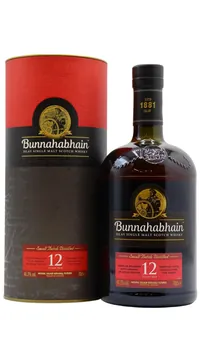
Bunnahabhain 12 Year Old
12 years · 46.3% ABV · 70cl
from £36.39 shelf price 5 retailers
£41.34 delivered
Price gap up to £13.11
Compare prices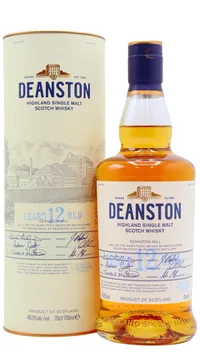
Deanston 12 Year Old
12 years · 46.3% ABV · 70cl
from £35.95 shelf price 5 retailers
£40.90 delivered
Price gap up to £9.00
Compare prices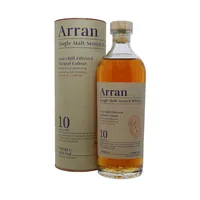
Arran 10 Year Old
10 years · 46.0% ABV · 70cl
from £44.50 shelf price 4 retailers
£49.00 delivered
Price gap up to £5.00
Compare prices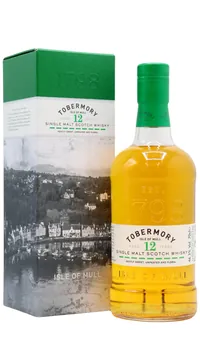
Tobermory 12 Year Old
12 years · 46.3% ABV · 70cl
from £32.99 shelf price 5 retailers
£37.94 delivered
Price gap up to £14.96
Compare pricesThe cloud test
You can see the effect yourself. The Scotch Whisky Association says non-chill filtered Scotch will go cloudy if ice is added to it. A chill-filtered whisky is meant to stay clear. Either way, the haze is cosmetic: it is a change in appearance, not a fault in the whisky.
Sources and review
Questions
Which Scotch distilleries say they don't chill-filter?
Is chill filtration allowed in Scotch whisky?
What does chill filtering do to whisky?
Is non-chill filtered whisky better?
Cite this page
John Fegan (24 October 2026). "Chill filtration in whisky: the NCF debate". Uisge Beatha. Updated 12 November 2026. https://uisgebeatha.co.uk/guides/chill-filtration-and-ncf/. Accessed [date you read it].
Wikitext
<ref>{{cite web |title=Chill filtration in whisky: the NCF debate |url=https://uisgebeatha.co.uk/guides/chill-filtration-and-ncf/ |website=Uisge Beatha |author=John Fegan |date=24 October 2026 |access-date=[date you read it]}}</ref>Where a point is covered by a paper, statute or official record named in the sources note, cite that first. Cite this page for its tables and worked explanations.
About the author
