On this page
Fictional whisky brands in films and TV, from Glencallan
Glencallan, Glen McKenna, Glengoolie and MacCutcheon: the invented whiskies of film and TV, why prop departments make them and the few that went on sale.
Watch enough American television and you start to recognise the bottles. The same tall Glencallan turns up in a detective’s desk drawer, a surgeon’s office and a biker clubhouse, in shows that have nothing to do with each other. It looks like Scotch, it is labelled like Scotch, and you cannot buy it, because it was never whisky at all.
This guide covers the fictional whiskies of film and TV: the stock props that prop houses hire out to every production in Los Angeles, the brands written for a single show and the handful that escaped into real bottles. For real labels seen on screen, from Macallan in Skyfall to Ron Swanson’s Lagavulin, see the companion guide to real whisky in films and TV.
Why productions invent whisky brands
A real bottle on screen raises questions a set dresser would rather avoid. Broadcasters sell advertising, and a show that features one drinks brand makes it harder to sell a slot to its rival. Showing a real label may need the brand’s clearance, and a brand is unlikely to welcome its bottle smashed in a fight or poured by a villain. Then there is the risk that a visible label reads as an endorsement nobody has paid for.
The older fix was tape, or a cover label stuck over the real one. In the trade this is called greeking, from “it’s all Greek to me”, and the word now covers digital blurring too. The tidier fix is a label that was never real. The founder of Independent Studio Services (ISS), a Los Angeles prop house, told HuffPost in 2014 that networks want props generic so they can take advertising from Coca-Cola and Pepsi alike. The same logic applies to whisky, and ISS’s graphics arm keeps a cellar of invented Scotch, bourbon and Irish whiskey labels for hire.
That is why fictional whisky falls into two groups. Stock brands are made once and reused everywhere, so they carry no story. Show brands are written into the script, and the joke or plot point depends on the name.
Glencallan, the stock bottle in dozens of shows
Glencallan is the best-known prop whisky in American television. It is an ISS label, styled as a Highland single malt, and fan trackers trace it back to The Shield (2002). Since then it has been listed in Burn Notice, Nip/Tuck, Sons of Anarchy, Grey’s Anatomy, Community, Breakout Kings, The Mindy Project, Agents of S.H.I.E.L.D. and Chicago P.D., among many others. scotchwhisky.com confirmed ISS as its maker in 2017.
It is often said to appear in The Office. We could not find an episode that shows it, and none of the sources we checked gives one. Two near misses may explain the claim. Glencallan is listed in Space Force, which came from the same creators and star, and fan trackers place another ISS whisky, J. Darby, in a late episode of The Office. If you have a screenshot, we would like to see it.
Glencallan has never been bottled for sale. Its fake distillery details are just enough to pass at a glance, which is the point.
J. Darby, Balmoor and Clyburn
J. Darby is the veteran of the ISS cellar. It was first made for Dallas (1978), where it was Jock Ewing’s whisky, and it has since been listed in Lost, NCIS, Bones, Californication, Ray Donovan, Star Trek: Picard and the film Ava (2020).
Balmoor, usually seen as a 21-year-old, comes from a different prop house, HPR Graphics, according to scotchwhisky.com. It has been spotted in The Grinder, The Defenders and Lipstick Jungle, and viewers have reported it in Boston Legal, Chicago Med and The Originals.
Clyburn is the bottle in Commissioner Loeb’s office in The Dark Knight (2008), the drink the Joker poisons. It also turns up in Rock of Ages (2012).
Stock brands like these are easy to spot once you know the pattern: a Glen or Mac prefix, a plausible age statement, a crest and a label that gives nothing away about where the whisky is made. Compare them with the details a real label must carry in our guide to how to read a whisky label.
Glen McKenna in How I Met Your Mother
Glen McKenna is the opposite of a stock prop: the writers of How I Met Your Mother (2005–2014) built jokes around it for years. The creators named it after a writer they had worked with on American Dad!, their previous show. Ted talks about it with great seriousness, and the show keeps undercutting him: in the fourth series he describes a 50-year-old bottle in tasting-note language that says almost nothing, and over the years bottle after bottle ends up broken on the floor.
The best-remembered scene is in the ninth series episode “Last Time in New York” (2013). Lily and Robin break the 30-year-old Glen McKenna that Ted had saved for a drink with Barney, during a sword fight, and try to fake what is left. No distillery has used the name.
Glengoolie Blue in Archer
In the animated spy comedy Archer (2009–2023), the house Scotch is Glengoolie, a fictional label that fan episode guides list in at least two versions, Black and Blue, with Blue as the top of the range. The colour-coded range looks like a nod to the big blended Scotch brands. No Glengoolie whisky has been released.
Hennigan’s in Seinfeld
Hennigan’s is the fictional Scotch of Seinfeld. In “The Red Dot” (1991), Jerry has an old bottle from his uncle that has sat around for so long he has been using it as paint thinner. He has Kramer drink some to test whether drink can be smelled on someone’s breath, finds that it leaves no smell, and Kramer starts imagining an advert for it. The odourless claim is the joke: no Scotch works that way.
MacCutcheon in Lost
Lost (2004–2010) gave its fictional whisky a back story. MacCutcheon first appears in the third series episode “Flashes Before Your Eyes” (2007), when the industrialist Charles Widmore pours himself a 60-year-old and pointedly refuses to share it with Desmond, the man who wants to marry his daughter. Fan episode guides record the label in later flashbacks and again in the final series, when Widmore offers Desmond a glass. It is a rare case of a prop whisky used to mark a turn in a story, not just to dress a set.
Black Pony in Laura
Fictional whisky is older than television. In the film noir Laura (1944), a bottle of a Scotch called Black Pony becomes a clue. It turns up in Laura’s flat, and the detective uses it as evidence that someone was there on the night of the murder. The label matters only as evidence of who has been in the flat.
Aldebaran whiskey in Star Trek
In Star Trek: The Next Generation, the episode “Relics” (1992) has the android Data pour a drink for Scotty from Guinan’s private stock. Asked what it is, Data can only say that it is green. Picard later identifies it as Aldebaran whiskey, a gift from him to Guinan. The scene repeats a gag from the original series, where Scotty can offer only the same description of an alien drink, and the whisky has turned up in later Star Trek series.
MacWeldon in The Simpsons
The Simpsons sent Groundskeeper Willie back to Scotland in “Ae Bonny Romance” (2023). He finds he is engaged to Maisie MacWeldon, and the engagement turns out to be her family’s scheme to make money from his sense of smell; fan episode guides describe the family business as a whisky distillery that wants his nose for good peat. Peat does matter to flavour, if not quite like that; see our guide to peat, phenols and ppm.
Glen Nairn in Glenrothan
The film Glenrothan, which premiered in 2025, is set in a fictional Highland village of that name, not at a distillery called Glenrothan, and it should not be confused with the real Glenrothes. The family distillery at the centre of the story is Glen Nairn, played by the real Falkirk Distillery near Polmont, where filming took place in 2024. The film opened in UK cinemas in April 2026. No Glen Nairn whisky has been released.
Malt Mill, a real distillery with a fictional cask
The Angels’ Share (2012) sits between real and invented. Its plot turns on a cask of Malt Mill coming up for auction. Malt Mill was a real distillery on the Lagavulin site from 1908 to 1962, so the name is genuine, but the cask is invented. Some write-ups describe Malt Mill itself as fictional, which is wrong. Shortly after the film’s release, Lagavulin put on show a bottle of Malt Mill new-make spirit, which it described as the only one known, from the distillery’s last fill in 1962. More on the film’s real filming locations is in our real whisky on screen guide.
When a fictional whisky went on sale
A few screen whiskies have crossed over. They are licensed products, made by real producers to the film’s brief, and they tell you about marketing, not about the prop shelf.
- Great Odin’s Raven. In Anchorman (2004), “Great Odin’s raven” is Ron Burgundy’s catchphrase, not a bottle. For the sequel in December 2013, Paramount licensed a Great Odin’s Raven Special Reserve blended Scotch, blended and bottled in Scotland by Old St Andrews, at 40% ABV. It was sold in North America.
- Statesman. Kingsman: The Golden Circle (2017) invented an American spy agency that runs a Kentucky whiskey distillery as its front. Old Forester and the film’s producers announced a partnership, and Old Forester Statesman, a straight bourbon, went on sale in August 2017. GlenDronach released a Kingsman Edition single malt for the same film.
- Aldebaran. In September 2024 V-Sinne, a German distillery, launched an Aldebaran spirit under an official Star Trek licence: a green, malt whisky based spirit at 38% ABV, limited to 5,344 bottles. It is a spirit drink, not a whisky.
These differ from tie-ins for real brands, such as White Walker by Johnnie Walker for Game of Thrones (2018), where an existing whisky brand borrows a show’s look.
Sources and review
Single malt whisky to compare
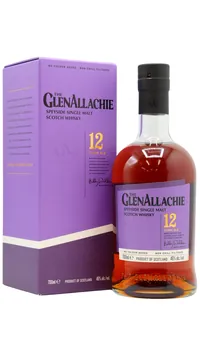
GlenAllachie 12 Year Old Single Malt Whisky
12 years · 46.0% ABV · 70cl
from £39.90 shelf price 6 retailers
£44.85 delivered
Price gap up to £20.05
Compare prices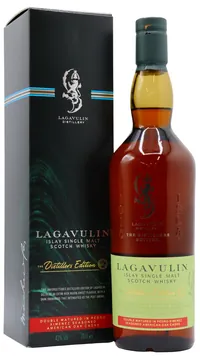
Lagavulin Distillers Edition Double Matured
43.0% ABV · 70cl
Distillers Edition Double Matured · cask finish, multi cask, pedro ximenez, sherry cask · Multiple cask types · Pedro Ximénez · Sherry cask
from £69.96 shelf price 6 retailers
£74.91 delivered
Price gap up to £50.04
Compare prices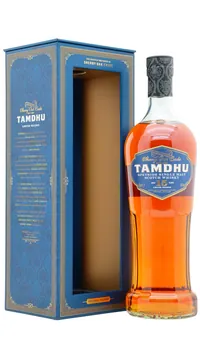
Tamdhu 15 Year Old Sherry Cask Matured Single Malt Whisky
15 years · 46.0% ABV · 70cl
from £84.50 shelf price 6 retailers
£89.00 delivered
Price gap up to £10.50
Compare prices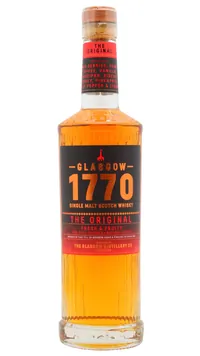
1770 Glasgow Original Single Malt
46.0% ABV · 70cl
from £42.95 shelf price 5 retailers
£48.90 delivered
Price gap up to £5.05
Compare pricesQuestions
Is Glencallan a real whisky?
Is Glen McKenna a real Scotch?
Can you buy Ron Burgundy's Great Odin's Raven Scotch?
Why do TV shows use fake whisky brands?
About the author
