On this page
How brandy is made: a guide for whisky drinkers
How Cognac and Armagnac are distilled, adjusted with sugar, caramel and boisé, and aged in French oak, compared step by step with Scotch malt whisky.
Cognac and malt whisky are close relatives. Both are fermented, distilled twice in copper pot stills and shaped by years in oak. Most of the differences are paperwork. Brandy starts from wine rather than a beer-like wash, ages in toasted French oak rather than charred American oak, and may legally contain sugar, caramel and an oak-chip infusion called boisé. Scotch may contain nothing but water and plain caramel, which makes it look positively monastic by comparison.
Here we follow Cognac from vineyard to bottle and compare each stage with whisky, bringing in Armagnac, Brandy de Jerez and Calvados where they do something different. Uisge Beatha compares whisky prices, not brandy, so the bottles at the end are whiskies that use brandy casks or French oak. If you already drink Cognac and want a whisky, our guide to whisky for Cognac and brandy lovers starts from the other side.
What counts as brandy
Generic brandy is a looser category than whisky drinkers expect, and the EU rules are noticeably more relaxed about it than they are about whisky. Regulation (EU) 2019/787 (Annex I, consolidated text of 13 May 2024) sets two accommodating tiers below the appellations:
- Wine spirit is distilled from wine at less than 86% ABV and bottled at 37.5% or more. It needs no ageing. It may be coloured with caramel and sweetened, but the finished drink may hold no more than 20 grams of sweetening per litre, expressed as invert sugar.
- Brandy, or Weinbrand, is wine spirit aged for at least a year in oak vessels of 1,000 litres or more, or six months in smaller casks, and bottled at 36% or more. Up to half its alcohol may be wine distillate made at up to 94.8%, the same ceiling as whisky. It may be sweetened to 35 grams per litre.
Cognac and Armagnac sit on top of these as protected appellations, with much tighter rules of their own. The whisky entry in the same annex insists that whisky “shall not be sweetened, even for rounding off the taste” (which is unusually specific for a legal annex), and allows only plain caramel (E150a) for colour. The Scotch Whisky Regulations 2009 add at least three years in oak casks of no more than 700 litres and a minimum of 40% ABV. Compared with generic brandy at 36% ABV, six months in oak and 35 grams of sugar a litre, Scotch is hardly playing the same game. Our guide to spirit caramel in whisky covers the one additive Scotch does allow.
From thin wine to white spirit
The vineyard and the wine
Cognac comes from six crus around the Charente: Grande Champagne, Petite Champagne, Borderies, Fins Bois, Bons Bois and Bois Ordinaires. Their boundaries follow Henri Coquand’s survey of the soils in the 1860s and were fixed by decree in 1938 (BNIC). “Fine Champagne” on a label sounds like a vague compliment and turns out to be an exact rule: a blend of the two Champagnes with at least half from Grande Champagne. The chalky Champagnes are known for slow-maturing, long-lived spirit, Borderies for floral notes and the Bois for fruitier spirit that is ready sooner. In whisky terms the cru does some of the work that a region and a still shape do in Scotland.
The grape is almost always Ugni Blanc: the Cognac trade body, the BNIC, gives it more than 98% of the 87,648 hectares under vine in 2025 (BNIC, Cognac in figures). It is picked early for acidity and makes a thin, sharp wine that nobody would mistake for a dinner-table treat. The Cognac specification, approved by arrêté on 20 February 2025, bans every method of enrichment and any added sulphur dioxide during fermentation, and requires the wine to be between 7% and 12% ABV when it is distilled. Without sulphur the wine keeps badly, so there is no hanging about: it is distilled quickly, and all distillation must be finished by 31 March after the harvest. A malt distillery works all year; Cognac puts its stills on a winter timetable and stops when the deadline arrives.
Double distillation in the alambic charentais
The Charentais still will look familiar to anyone who has stood in a malt still house: a copper pot with a helmet (chapiteau), a swan neck (col de cygne) and a coiled condenser, sometimes with a wine preheater (chauffe-vin) that uses the hot vapour to warm the next charge. The specification then gets remarkably prescriptive about the plumbing, going further than Scotch ever has. The boiler must be heated over a naked flame, now usually gas, where most malt stills use indirect steam. It even polices the pot size: for the second distillation the boiler may hold no more than 30 hectolitres, with a charge of no more than 25 hectolitres; larger boilers, up to 140 hectolitres, are allowed only for the first.
The first distillation turns the wine into brouillis of roughly 28% to 32% ABV, the equivalent of low wines. The second, the bonne chauffe, is the spirit run, and the new spirit may be no stronger than 73.7% at 20°C. Martell’s figures, published by Difford’s Guide, give a sense of scale: 20-hectolitre charges of brouillis, a heart of about 6.5 hectolitres averaging 71.5%, and about nine litres of wine for each litre of new spirit.
Two choices shape a house style, much as fermentation length and cut points do at a malt distillery. The first is whether to distil the wine on its lees, which gives a fatter, nuttier spirit; Rémy Martin, Hine, Camus and Frapin do, while Martell distils clear wine (Alcademics). The second is where the heads and tails go: the specification lets them be returned to the next charge of wine or to the next brouillis, and the choice changes the weight of the spirit. Even inside a rulebook this detailed, houses still manage to build noticeably different spirits.
On smaller screens, scroll sideways to see every column.
| Stage | Scotch malt whisky | Cognac |
|---|---|---|
| Raw material | Malted barley, fermented to a wash of about 7–8% ABV | Mostly Ugni Blanc wine of 7–12% ABV, with no enrichment or sulphur |
| First distillation | Wash still, low wines at about 21–30% | Première chauffe, brouillis at about 28–32% |
| Second distillation | Spirit still, new make usually around 63–72% | Bonne chauffe in a boiler of 30 hl or less, no more than 73.7% |
| Heat | Usually indirect steam | Naked flame, required by the specification |
| Season | All year | Finished by 31 March after the harvest |
| Heads and tails | Back into the next low wines | Back into the next wine or brouillis, at the house’s choice |
Our production course covers the whisky side of this in batch pot distillation.
Armagnac and the column still
Armagnac, in Gascony, is Cognac’s older and more rural relative. Ugni Blanc dominates here too, but Baco Blanc, a hybrid bred by François Baco in 1898, gives a rounder, fruitier spirit. Most Armagnac goes through the alambic armagnacais, a small continuous column. The Armagnac specification, approved by arrêté on 27 March 2025, requires it to be copper and to have no more than 15 plates, and the spirit must come off between 52% and 72.4% ABV. Whisky drinkers tend to think of a column as the route to a light grain spirit at about 94%. The Armagnac column is a different creature: it runs far lower, so the spirit keeps more of the flavour compounds from the wine, and young Armagnac is heavier and more pungent than young Cognac. Double distillation in pot stills is also allowed, though fewer producers use it.
Other brandies in brief
Brandy de Jerez is made mostly from Airén wine from La Mancha and blends low-strength holandas with stronger spirit, then ages in sherry-seasoned butts in a solera (Consejo Regulador). Calvados is distilled from cider and perry; Pays d’Auge must be double distilled in pot stills, while Domfrontais, made with a high share of perry pears, is column distilled (IDAC). South African pot still brandy must be batch distilled and aged for at least three years in oak casks of no more than 340 litres (Liquor Products Act regulations), which makes it, oddly enough, the brandy category closest to single malt rules.
What can go into the bottle
Sugar, caramel and boisé
This is where brandy and Scotch part company most sharply. Scotch stops at water and plain caramel; Cognac treats caramel as only the start. The Cognac specification of February 2025 allows the cellar master three finishing methods and no others:
- caramel E150a, to adjust the colour;
- sweetening with the sugars allowed by the EU regulation, “to complete the final taste” (an admirably polite way of saying the spirit could use a spoonful of sugar);
- an infusion of oak chips in hot water, known as boisé, which the specification calls a traditional method. The wood must be the same species as the casks, and the infusion may be stabilised with Cognac.
Rather than setting a plain sugar limit in grams, the specification limits obscuration: the difference between a spirit’s real alcoholic strength and the strength a hydrometer reads once dissolved solids get in the way. The combined effect of all three methods must be no more than 4% vol. Armagnac’s specification of March 2025 allows the same three methods with an obscuration limit of less than 4% vol. If the whole allowance went on sugar, it would correspond to about 16 grams per litre in a 40% spirit, according to the oenology laboratory Evelyne Chanson. In practice caramel and boisé share that 4% allowance, and the cask itself adds some obscuration to even an untouched spirit. Behind the appellation rule sits the EU ceiling for wine spirit of 20 grams per litre.
The awkward bit is the silence on the bottle. None of this has to be declared. Under EU food labelling rules (Regulation 1169/2011, Article 16), drinks above 1.2% ABV need not list ingredients or give a nutrition declaration, so a sweetened, coloured, boisé-adjusted Cognac sits on the shelf looking just like an untouched one.
How much sugar is there
The Swedish state retailer, Systembolaget, prints a sugar figure on each product page, which gives a rough check. These are figures for the batch it tested, checked on 22 November 2026, and other batches may differ.
On smaller screens, scroll sideways to see every column.
| Cognac | Sugar, grams per litre | Source |
|---|---|---|
| Hennessy VS | 14 | Systembolaget |
| Rémy Martin VSOP | 5 | Systembolaget |
| Louis Royer VS | under 3 | Systembolaget |
Laboratory tests published by smaller producers and sellers tell the same story at the other end. Malternative Belgium published obscuration of 0.43% and 0.67% for two Laurichesse Cognacs (Malternative Belgium), and Cognac Expert measured an unnamed XO at 2.82% against 0.60% for an additive-free single cask (Cognac Expert).
Bottles with nothing added
A group of producers now make a point of adding nothing but water, much as some whisky bottlers print “natural colour” and “non-chill-filtered” on the label. Cognac Reverie lists Dudognon, Navarre, Delamain and Jean-Luc Pasquet among them (Cognac Reverie). There is no regulated term for it, though, which leaves buyers squinting at the glass and guessing. A dark colour does not prove caramel, and sweetness does not prove sugar, because a long-aged spirit takes both from the wood. The only evidence is the producer’s statement or a laboratory figure.
A history of fakes
Adulteration, as opposed to the permitted adjustments above, has a long history. Phylloxera reached Cognac in the 1870s and destroyed most of the vineyard by the 1890s (BNIC). Demand stubbornly refused to fall alongside the vines, and the 1911 Encyclopædia Britannica records beet, potato and grain spirit blended with grape spirit and artificial flavourings used in cheap brandy (Wikisource). In the Commons in 1906 one MP complained of patent-still spirit made from “decayed maize, sago, beet, potatoes, treacle” being sold as brandy (Hansard), a list that reads less like a drinks cabinet than a pantry clearing itself out.
This is where the two drinks’ histories meet. The same arguments over what could be sold under which name fed the Royal Commission on Whiskey and Other Potable Spirits of 1908 and 1909, which decided that patent-still grain spirit could be called whisky (Nature). France took the opposite route and reached for legal protection: it delimited the Cognac region in 1909, created the appellation in 1936 and fixed the crus in 1938.
The modern versions are counterfeits and refills. Chinese customs destroyed more than 10,000 fake bottles in Chengdu in 2019, and in 2021 a Chengdu court upheld the BNIC’s collective “Cognac” trademark (BNIC). At auction, fake “vintage” Cognacs have appeared in numbers; one Dutch collectors’ site documents a run sold under the Jacques Lagan name around 2020 and 2021, all at an oddly uniform 43.6% ABV (Cognac-ton). The laboratory tools are the ones used on whisky: carbon isotope ratios show whether alcohol came from grapes, cane or maize, and gas chromatography fingerprints the congeners (Beverages). If you buy old bottles at auction, the same care applies to both drinks; our guide to buying whisky at auction covers what to check.
Maturation: French oak and damp cellars
The wood
Cognac must age without interruption in oak, and its casks are toasted rather than charred (Alcademics). That is one of the clearest differences from common whisky practice. The char inside a bourbon barrel gives quick vanilla and caramelised sweetness; a toasted French oak cask gives tannin and spice more slowly, and over long ageing oxygen does much of the work.
The staves are French oak, split along the grain rather than sawn, and seasoned outdoors for about two years so that rain can wash out the harshest tannins (BNIC). Casks are typically around 350 litres, against about 200 for a bourbon barrel; Rémy Martin uses 270 litres. Whisky distilleries buy them second-hand for finishing, which is how most brandy cask whiskies are made.
Tradition says Limousin oak, wide-grained and tannic, suits long ageing and Tronçais, tight-grained and aromatic, suits finesse. As is often the case with drinks traditions, the chemistry has its own ideas. Studies of hundreds of trees found that the species matters far more than the grain (Doussot et al. 2000; Prida et al. 2007). Pedunculate oak (Quercus robur), the usual Limousin tree, carries more ellagitannins; sessile oak (Quercus petraea), the usual Tronçais tree, carries much more whisky lactone, eugenol and vanillin. The forest name gets the credit in tradition, while the tree species does the work. The same applies to the European oak in sherry casks, as our French oak page and guide to sherry casks explain.
New wood first, then old
New spirit usually spends six months to a year in new oak, then moves to older casks, the fûts roux (BNIC). Laboratory work on Cognac in new toasted barrels found that the oak’s own ellagitannins peak in the spirit at about three months, while other tannin compounds go on building to 18 months and beyond (Gadrat et al. 2023). After that, the cellar master’s job is mostly to slow things down. A whisky drinker would think of a refill hogshead in a dunnage warehouse rather than a first-fill bourbon barrel. Our chapter on oak maturation chemistry covers the same reactions in whisky.
Cognac can be finished, though only inside a strict legal fence. The ageing rules (arrêté of 27 July 2003) allow new casks and casks that held wine or wine spirit, which takes in sherry and port casks, but not casks that held other spirits. An ex-bourbon barrel, perfectly ordinary in Scotch, is out of bounds. That is why Martell Blue Swift, finished in ex-bourbon casks, loses the right to the name Cognac and has to go out on the label as “eau-de-vie de vin” (Decanter).
Damp and dry cellars
Cognac warehouses, the chais, are usually ground-level stone buildings with earth floors, close relatives of dunnage. Their humidity matters. In damp cellars, often by the river, the spirit loses relatively more alcohol than water, so its strength falls faster and it turns out rounder. Dry cellars lose more water and more volume and give a tauter spirit (Alcademics). Whisky drinkers see the same split between warm, dry American rickhouses, where strength can rise, and cool, damp Scottish warehouses, where it falls. Cognac houses move casks between cellars to steer the result.
The BNIC puts the angels’ share at 41 million bottles a year, from about 2.2 billion bottles’ worth ageing in oak (BNIC, Cognac in figures). The vapour feeds Baudoinia compniacensis, the black fungus that stains the walls around every chai, and around Scottish warehouses too (an unusually thorough way for an industry’s losses to announce themselves on the masonry).
Bringing the strength down
Cognac is rarely bottled at cask strength. The cellar master reduces it in stages, a few degrees at a time and often over years. Some houses use petites eaux, weak mixtures of water and old Cognac; others, including Hine and Camus, use plain water (Whisky Magazine). Slow reduction is said to avoid the flat, disjointed character a sudden drop to 40% can cause, and some whisky makers have started to experiment with it.
When a Cognac has taken enough from the wood, sometimes after 40 or 50 years, it goes into glass demijohns in the house’s paradis (Cognac rarely settles for a plain word like “storeroom” when “paradise” is available), where it stops changing, just as whisky stops ageing once it is bottled (Martell).
Rancio
Rancio is the savoury character prized in old Cognac, often described as mushroom, walnut and cheese rind: three flavours that sound less like a luxury drink than a quiet corner of a larder, though very old sherry-cask malt whisky is often described in similar terms. Alexandre Gabriel of Maison Ferrand places its first appearance at about 15 to 20 years in cask (Oxford Companion to Spirits & Cocktails). The Cognac specification itself names the “rancio Charentais” as the aroma profile that comes with long ageing. The chemistry is not fully settled, and distilling on lees is thought to help.
Reading the age on a Cognac label
Cognac counts age in comptes, a system with its own peculiar calendar. New spirit sits in compte 00 until the end of the distilling season on 31 March; on 1 April it becomes compte 0, and it moves up one compte every 1 April after that. Starting at double zero and graduating to single zero has a logic all of its own. A blend takes the compte of its youngest spirit, just as a whisky’s age statement is that of its youngest whisky. The 2025 specification sets these minimums:
On smaller screens, scroll sideways to see every column.
| Label terms | Compte | Minimum age |
|---|---|---|
| VS, 3 Étoiles, Sélection, De Luxe | 2 | 2 years |
| VSOP, Réserve, Vieux, Rare, Royal | 4 | 4 years |
| Napoléon, Très Vieille Réserve, Héritage | 6 | 6 years |
| XO, Hors d’Âge, Extra, Ancestral, Gold | 10 | 10 years |
| XXO, Extra Extra Old | 10 | 14 years |
The count stops there, so “Hors d’Âge”, which sounds wonderfully timeless, promises no more than XO does. That is one reason a 40-year-old Cognac is rarely sold with an age statement the way a 40-year-old Scotch is. Vintage Cognac exists but is tightly controlled. Armagnac follows similar terms, with XO at ten years since 2018 (Drinks International), and is far more relaxed about vintages and single casks. Brandy de Jerez works by average age from its solera rather than the youngest spirit. Our guide to whisky maturation and age statements sets out the whisky rules.
A trade under pressure
Cognac’s sales fell sharply in 2025. The BNIC’s own figures give 143.6 million bottles exported in 2025 and annual sales of €2.22 billion (BNIC, Cognac in figures). Trade reports of the BNIC’s annual results in March 2026 put the fall in shipments at 15.1% in volume and 25.3% in value against 2024 (Vino Joy). China’s commerce ministry imposed anti-dumping duties of 27.7% to 34.9% on EU brandy from 5 July 2025, for five years, but exempted producers that signed minimum-price undertakings, among them Hennessy, Rémy Cointreau and Pernod Ricard (Moodie Davitt; Fortune). On 30 April 2026 the BNIC announced a plan to take 12,000 to 13,000 hectares, about 15% of the vineyard, temporarily out of production (info.fr). Large stocks and falling exports do not by themselves mean that any given bottle has become cheaper.
Whiskies for a brandy drinker
Uisge Beatha does not compare brandy prices, but the parts of Cognac a whisky drinker is likely to enjoy can be found in whisky. Look for a brandy cask or French oak on the label, and check whether the cask was the whole maturation or a finish of a few months. Our brandy cask page lists whiskies finished or matured in casks that held Cognac, Armagnac or Calvados, and the French oak page covers whiskies aged in the same kind of wood.
Craigellachie 13 Year Old Armagnac Finish is a Speyside single malt bottled at 46% ABV and finished in Armagnac casks. £54.95 at Master of Malt
Balvenie 16 Year Old French Oak is finished in French oak casks that held Pineau des Charentes, the Cognac region’s grape must fortified with Cognac. £133.50 at Master of Malt
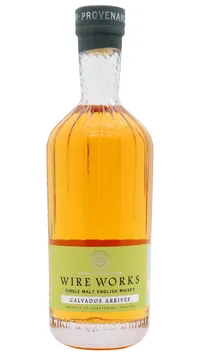
White Peak Wire Works - Calvados Arrivee English Single Malt Whisky
49.2% ABV · 70cl
from £64.95 shelf price 4 retailers
£69.90 delivered
Price gap up to £6.05
Compare prices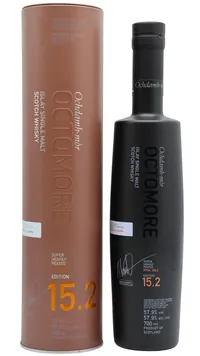
Bruichladdich Octomore 15.2 Whisky 70cl
57.9% ABV · 70cl
from £149.99 shelf price 3 retailers
£149.99 delivered
Price gap up to £24.96
Compare prices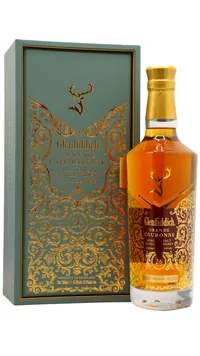
Glenfiddich Grande Couronne 26 Year Old
26 years · 43.8% ABV · 70cl
from £468.95 shelf price 3 retailers
£468.95 delivered
Price gap up to £46.00
Compare prices
Battlehill Glenrothes 2009 12 Year Old
12 years · 46.0% ABV · 70cl
from £72.50 shelf price 2 retailers
£77.00 delivered
Price gap up to £7.45
Compare prices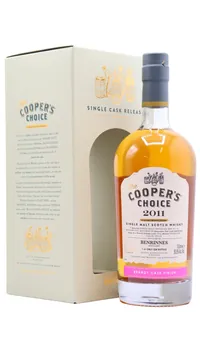
Benrinnes 11 Year Old 2011 - The Cooper's Choice Single Malt Whisky
11 years · 70cl
from £73.95 shelf price 2 retailers
£78.90 delivered
Price gap up to £16.00
Compare prices
Glentauchers 2011 11 Year Old, Cognac Cask
11 years · 46.0% ABV · 70cl
from £62.00 shelf price 2 retailers
£66.50 delivered
Price gap up to £3.95
Compare pricesFor a fuller set of picks matched to VS, VSOP and XO drinkers, see our guide to whisky for Cognac and brandy lovers.
Sources and review
Questions
Can sugar be added to Cognac?
What is boisé in Cognac?
How old is a VS, VSOP or XO Cognac?
How is Armagnac different from Cognac?
About the author
