On this page
Irish single pot still whiskey explained
What single pot still means, where the malt tax story goes wrong, how raw barley gets converted, and how Redbreast and the new distilleries differ.
Single pot still is Irish whiskey made at one distillery, in pot stills, from a mash that mixes malted barley using a quantity of unmalted barley. The raw barley is the point. The Irish whiskey technical file calls it “an essential ingredient” and credits it with “a distinctive spicy flavour” and “a distinct creamy mouth-feel”. Compare bottles on our single pot still page.
It is also the only major whiskey style that is routinely explained as a tax dodge. The explanation is tidy, widely repeated and at least partially incorrect, which is a respectable record for a whiskey fact and guarantees it goes down as legend. The rest of the story involves an enzyme surplus, some of the largest pot stills ever built, a period when the entire category was two bottlings, and a definition written in 2014 that some of the style’s own historians think describes a slightly different drink.
What the rules say
The technical file, published by Ireland’s Department of Agriculture, Food and the Marine in October 2014, defines Pot Still Irish Whiskey by its mash: “up to 5% of other cereals such as oats and rye” and “a minimum of 30% malted barley and a minimum of 30% unmalted barley”. The remainder being made up of any desired combination of barley, whether malted, raw, or a mixture of both. In practice, most modern distillers make up the full 100% from a combination of malted and unmalted barley alone.
The mash is distilled in pot stills, in batches. Triple distillation is described as “the traditional practice”, with the concession that “double distillation may also be employed”. The general Irish whiskey rules then apply: distilled to less than 94.8% ABV, matured on the island of Ireland for at least three years in wooden casks of no more than 700 litres, and bottled at 40% ABV or above.
“Single” means exactly the same thing on an Irish whiskey as on a bottle of Scotch. All of the whiskey was distilled at a single distillery. It does not mean a single grain, a single still or a single cask, and a standard bottling is a vatting of many casks.
Older bottles say “pure pot still” instead. Around 2011 the labels changed because the US Alcohol and Tobacco Tax and Trade Bureau (TTB) restricts the word “pure” on spirit labels. The rule was then in 27 CFR § 5.42 and is now in § 5.91. When Irish Distillers prepared to launch Redbreast 15 Year Old in America, they replaced “pure” with “single”, borrowing the single malt convention to show the whiskey came from a single distillery, and rolled the term out globally. A review of Redbreast 15 Year Old from that March records the switch as it happened. Nothing in the bottle changed. The whiskey had simply been asked to stop making claims about its character.
The malt tax story, and what is wrong with it
The standard account goes like this. In 1785 the Irish Parliament put a duty on malt (the act is 25 Geo. 3 c. 3, “certain duties upon malt”). Distillers, who had been using malted barley, looked at the bill, looked at the heap of perfectly good barley that had not been malted and therefore owed nothing, and drew the obvious conclusion. A loophole became a recipe, the recipe became a tradition, and the tradition now has a technical file.
It is a good story. It has a helpful villain in the form of the hated English excise, a clever workaround and a happy ending, and it makes thrift look like genius. The difficulty arises as soon as anyone looks at the calendar.
Nine years before the Irish duty, Adam Smith was already describing the practice in The Wealth of Nations, where malt in “what are called malt spirits” makes “commonly but a third part of the materials”, the rest being raw barley, or barley and wheat. The historian Fionnán O’Connor, whose doctoral research at TU Dublin covers lost Irish mash bills, has made the same point from the other direction. He told VinePair that the 1785 law itself prohibited mixed mashes of malted and unmalted grain, and that “the fact that the practice was prohibited means that it must have been in use before the tax.” Parliaments have many faults, but they do not generally legislate against porridge nobody is making.
So the tax did not invent the mixed mash. Raw grain was cheaper than malt before anyone taxed malt, because malting takes time, fuel, floor space and a maltster. The duty gave distillers one more reason to carry on, and it kept giving them that reason for most of a century: malt duty was abolished across the United Kingdom, Ireland included, by the Inland Revenue Act 1880.
The interesting part is what happened next, which is nothing. With the loophole closed and no money left in it, Irish distillers kept putting raw barley in the mash anyway. People do not persist with a tax dodge after the tax has gone. They had come to like what it did to the whiskey.
Diastatic power: how a minority of malt does all the work
Whiskey is made from fermentable sugar, but most of a grain’s carbohydrate is starch, which yeast cannot eat directly. Converting one into the other is the job of enzymes, chiefly alpha-amylase and beta-amylase, and a barley grain develops its working set of them only when it is malted: steeped, allowed to start growing, then dried before it gets any further.
A malt’s capacity to convert starch is its diastatic power, measured in degrees Lintner or on the IoB and Windisch-Kolbach scales that British and European maltsters prefer. The important fact about it is that malt is absurdly over-equipped. A good distilling malt carries far more enzyme than it needs for its own starch, in the manner of a man who brings a full socket set to change a light bulb. Grain distillers rely on this every day. As the brewing supplier Murphy & Son puts it, high diastatic power malts are used in grain distilling precisely because unmalted cereals supply most of the starch.
Raw barley is the opposite sort of colleague. It arrives with a great deal of starch and no practical means of doing anything about it. Put the two in a mash tun at the right temperature and the malt’s surplus enzymes convert the lot, their own starch and everybody else’s.
This is why the 30% minimum for malt is comfortable, not daring. In practice distillers stay well above it. Barry Crockett, Midleton’s master distiller emeritus, told Whisky Magazine that malt there makes up “about 40 to 45 per cent” of the pot still mash, and Teeling uses half and half.
The law takes a view on all this. Scotch must be converted “only by endogenous enzyme systems”, in the words of the Scotch Whisky Regulations 2009, which means the grain’s own enzymes and no bought-in help. American distillers have it easier: US federal regulations permit bourbon and rye makers to add commercial, laboratory-cultured enzymes directly to the mash, letting distillers convert vast cookers of corn and rye without relying on the grain alone. The Irish technical file sits in between: a mash “saccharified by the diastase of malt contained therein, with or without other natural enzymes”. You cannot simply pour in a drum of industrial enzymes, but there is a touch more latitude than in Scotland. In both traditions, the heavy conversion still belongs to real malt.
Raw barley does extract a price for its cooperation. It is hard, so it needs more milling, and it is rich in beta-glucans, gums that thicken the mash. A paper in Cereal Chemistry noted “problems in mash run-off” at distilleries using barley as a significant ingredient, which is the scientific way of saying that the liquid declines to leave. Midleton’s answer was to stop asking it politely. The distillery replaced its lauter tuns, which drain a mash through its own bed of husks, with mash filters, which press it, and Engineers Ireland reported about 8% more extract from the grain and about 10% less brewing water as a result.
Why Irish pot stills grew so large
The technical file contains a pleasing pair of figures. In 1823, it says, “the biggest pot still recorded could hold just 750 gallons.” By 1867 at the latest, the distillery at Midleton had one that held 31,500.
Something had clearly got out of hand. In a little over forty years the Irish pot still had grown about forty-fold, from a piece of equipment into a piece of architecture. The big Dublin and Cork distillers were making whiskey on an industrial scale and had decided to do it without the continuous column still, which a former Irish excise officer, Aeneas Coffey, had patented in 1830 and which the Scotch blenders would go on to use against them. If you insist on batch distillation and also want to supply an empire, the batches have to get bigger. By the end of the century, the file adds, most pot still distillers had also adopted triple distillation.
The modern version is at Midleton in County Cork, where production moved to a new distillery in 1975. Its expansion in 2013 added three pot stills of 75,000 litres each, and its pot still spirit comes off the third distillation at about 84.5% ABV, according to Engineers Ireland. A Scotch malt distillery, distilling twice, usually collects its spirit at around 70%. Higher strength means a lighter, cleaner spirit, which is part of why Irish pot still can be oily and delicate in the same glass.
Why modern pot still is not quite the old kind
Here the history becomes a little more awkward for the traditional Irish definition.
The 5% allowance for “other cereals” is the narrow part. Nineteenth-century and early twentieth-century mash bills were considerably more sociable. Scotchwhisky.com cites six Irish mash bills recorded by the distilling writer J.A. Nettleton in 1893, in which other cereals, mainly oats, made up anything from nothing to 30%. Giving evidence to the Royal Commission on whiskey in 1908, Andrew Jameson accepted that oats, wheat and rye came to about a fifth of his mash. The technical file’s own history section says most distillers “used a mash of malted barley, unmalted barley and other cereals grown in Ireland”.
Then the other cereals were quietly left out in the cold. By the late twentieth century almost all Irish pot still whiskey came from one distillery, and that distillery’s recipe was comprised entirely of barley, both malted and unmalted. Crockett, in the same Whisky Magazine interview, said Midleton had last used oats about thirty years earlier. When the definition was codified in 2014, it described the pot still whiskey as it was currently being made, by the only company still making it. That is a reasonable way to write a definition. It is also how a house style becomes a law at the expense of the wider tradition.
Blackwater Distillery in County Waterford has argued the point most loudly, pointing to the historic recipes it has collected: “Not one of the historic mash bills I have seen is compliant with the new definition.” While that is a producer’s argument and should be understood as advocacy, the examples are not hard to find. O’Connor and Boann distillery in County Meath distilled ten historical recipes in December 2020. One of them, from Locke’s in the 1920s, is 40% malted barley, 40% unmalted barley, 15% oats and 5% rye, Whisky Magazine reported. Under the current file, a faithful recreation of a pot still whiskey from one of the old Irish pot still distilleries cannot be sold as pot still Irish whiskey.
Three other things separate the modern style from its ancestors.
- Peat. The file specifies “currently nonpeated malted barley”. The word “currently” is doing a lot of quiet work there, like a “temporarily closed” sign on a bridge, and the same document acknowledges peated malt in early nineteenth-century Irish distilling.
- Scale and control. A 75,000-litre still run to a programme produces a more consistent spirit than its coal-era ancestor could. Midleton makes several distinct pot still distillates from the same mash by changing the cuts and the route through the stills. Crockett describes the light one as “delicate, estery, fruity and honeyed” and the heavy one as “deep, rich, full with cereal character”, and a bottling such as Redbreast is assembled from them.
- Wood. Sherry and bourbon casks are bought to a specification now. They used to be whatever the wine trade had finished with.
The rules may be about to catch up. The Irish Whiskey Association asked in October 2021 for the other-cereals limit to rise to 30% of oats, wheat or rye, as Drinks Industry Ireland reported, and for the “currently non-peated” wording to go. The Department of Agriculture ran a public consultation from 26 June to 4 September 2026 (The Irish News). We had found no published decision by 23 November 2026.
How the style nearly vanished, and where Redbreast comes in
For most of the nineteenth century pot still was simply what Irish whiskey was. The twentieth century then removed its customers in sequence. Whisky Advocate lists the damage: the trade war with Britain in the 1930s shut Irish whiskey out of the Empire’s markets, and lighter, cheaper Scotch blends made with column still grain whisky took the shelf space. The surviving firms merged into Irish Distillers in 1966. Powers became a blend in 1967 and Jameson in 1968. Pot still spirit was still being made, but as an ingredient.
By the 1980s two single pot still bottlings were left, and neither belonged to a distiller. Both were merchants’ whiskeys, from the days when a wine merchant bought new spirit from a distillery and matured it in the firm’s own empty casks. Green Spot belonged to Mitchell & Son of Dublin. Redbreast belonged to Gilbey’s.
Gilbey’s was a wine and spirit merchant with a great many sherry casks and a supply of pot still spirit from Jameson’s Bow Street distillery. The usual account has a 12-year-old “JJ Liqueur” whiskey on sale by 1903 and the name Redbreast first recorded in 1912, supposedly the choice of a Gilbey’s chairman who was a keen birdwatcher. This is the kind of origin story that would normally deserve suspicion, except that nobody inventing one for marketing purposes would choose “the chairman liked robins”.
Gilbey’s stopped bottling it in 1985 and sold the name to Irish Distillers the following year. For a while Green Spot was the category. Redbreast came back in 1991 as a 12-year-old, now distilled at Midleton, and has been the reference point for the style since.
The range today:
- Redbreast 12 Year Old: 40% ABV, matured in oloroso sherry casks with some bourbon barrels.
- Redbreast 12 Year Old Cask Strength: added in 2011, bottled without dilution, so the strength varies by batch.
- Redbreast 15 Year Old: 46% ABV.
- Redbreast 18 Year Old: 46% ABV, added as a permanent bottling in 2024, with some ruby port casks alongside the sherry and bourbon.
- Redbreast 21 Year Old: 46% ABV, added in 2013.
The revival proper began in 2011, when Irish Distillers started treating single pot still as a range instead of a survivor, adding Powers John’s Lane 12 Year Old and the cask strength Redbreast that year and returning to the Spot whiskeys afterwards.
The new distilleries
Until recently, a guide to single pot still producers was a short document. It said “Midleton”. Every bottle on the shelf, whatever the label, was the same distillery’s spirit in a different arrangement of casks.
That has changed. Dingle in County Kerry released a single pot still in late 2017, and Teeling followed in 2018 with one made from a 50:50 mash, triple distilled and bottled at 46% ABV. The Shed distillery in County Leitrim bottles one as Drumshanbo. Clonakilty in County Cork released its first, triple distilled and matured in bourbon, amontillado and oloroso casks, in September 2024. Boann has its historical recipes maturing alongside a pot still that fits the current rules.
What matters is that they are not trying to make and sell their own version of Redbreast. Stephen Teeling conceded to Whisky Advocate that drinkers “may have wanted a knock-off of Redbreast, but that was the exact opposite of what we wanted to do.” His master distiller, Alex Chasko, made the historical point in the same article, about the pot still whiskeys of the mid-twentieth century: “Those pot stills tasted totally different from what’s being made today.”
The new producers differ from Midleton in ways you can read off the specification. The stills are a fraction of the size. The mash ratios vary. Most of the whiskey is young, primarily because the distilleries themselves are, so it is bottled without an age statement and leans on active casks: virgin oak, wine casks, sherry. And several are putting the other grains back. O’Connor, describing the oat-heavy Boann spirits to Whisky Magazine, said he had expected them to be muddy or creamy and found instead that “they ended up tasting really sweet, specifically vanilla-sweet”.
For the first time since the mergers, “single pot still” describes a category with an argument inside it.
What single pot still tastes like
Two words follow the style around: spice and texture. The spice is not chilli heat, and the trade calls it pot still spice for want of a better term. Tim Herlihy, an Irish whiskey brand ambassador, put it to VinePair as “more spice, more pepperiness, and there’s a mouthfeel to it as well”. The texture is the mouthfeel he means: an oily, coating weight.
Crockett’s summary, in Whisky Magazine, is that unmalted barley gives a “soft, spicy, apple type aroma and silky mouthfeel”. Dave Quinn of Irish Distillers told the same magazine that “higher proportions of unmalted barley promote more fruity notes, while also giving the whiskey a more creamy mouthfeel”, and contrasted pot still’s mouth-coating finish with the “relatively drier finish” of malt whiskey.
Why raw barley should do this is less settled than you might hope. Everyone in the industry agrees that it does, and the sources we read offered no agreed chemical mechanism. Quinn himself adds that “ultimately distillation has a bigger impact on the character of the whiskey” than the mash does. It is worth knowing that the most distinctive ingredient in Irish whiskey works by a process its own makers describe mainly by the results.
As a rough guide to what is on the shelf:
- The Midleton style (Redbreast, the Spot whiskeys, Powers John’s Lane 12 Year Old) is triple distilled, older and built around sherry and bourbon casks. Expect the spice and oiliness under dried fruit and toffee. Difford’s Guide describes Redbreast 12 Year Old in terms of “fruit cake, vanilla fudge and toffee-apple”.
- The newer distilleries tend to be younger and brighter, with more of the grain and the cask showing and less of the long sherry maturation. Clonakilty’s own notes for its first release run to vanilla, pear, apple and sea salt.
- Against a single malt, Irish or Scotch, the difference is mostly in the mouth. The malt will usually seem drier and more cereal-sweet, the pot still thicker and spicier.
Where to start
Redbreast 12 Year Old is the bottle the rest are measured against. Green Spot, from the same distillery, carries no age statement and is bottled at 40% ABV. Powers John’s Lane 12 Year Old is Midleton’s third take on the style, at 46% ABV. Teeling, Drumshanbo and Clonakilty show what the newer distilleries are doing with the same rules.
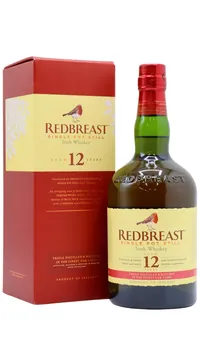
Redbreast 12 Year Old
12 years · 40.0% ABV · 70cl
from £56.00 shelf price 4 retailers
£60.95 delivered
Price gap up to £3.95
Compare prices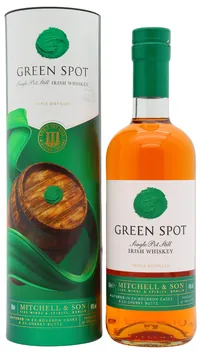
Green Spot Irish Whiskey 70cl
40.0% ABV · 70cl
from £43.90 shelf price 4 retailers
£48.85 delivered
Price gap up to £6.05
Compare prices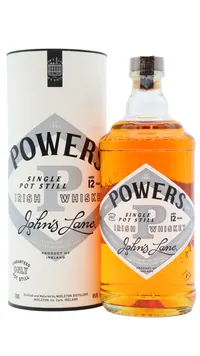
Powers John's Lane 12 Year Old
12 years · 46.0% ABV · 70cl
from £64.00 shelf price 4 retailers
£68.95 delivered
Price gap up to £7.95
Compare prices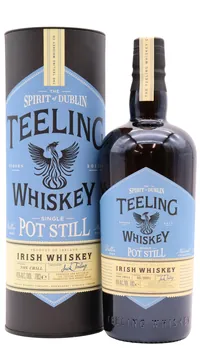
Teeling Single Irish Pot Still Whiskey
46.0% ABV · 70cl
from £39.95 shelf price 4 retailers
£45.90 delivered
Price gap up to £5.05
Compare prices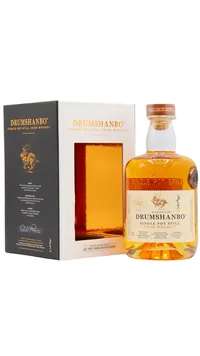
The Shed Distillery Drumshanbo Single Pot Still Irish Whiskey
70cl
from £51.50 shelf price 4 retailers
£56.45 delivered
Price gap up to £13.50
Compare prices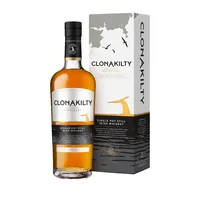
Clonakilty Single Pot Still 70cl
46.0% ABV · 70cl
from £50.03 shelf price 3 retailers
£54.98 delivered
Price gap up to £12.97
Compare pricesFor the wider field, see our guide to the best Irish whiskey, and for how the Irish rules sit beside everyone else’s, whisky’s legal definitions by country.
Sources and review
Questions
What is single pot still Irish whiskey?
Is Redbreast a single malt?
Does single pot still whiskey have to be triple distilled?
Can single pot still whiskey contain oats or rye?
About the author
