On this page
Cask strength whisky explained
What cask strength means on a Scotch label, why the ABV changes from batch to batch, how it differs from single cask, and how adding water works.
Cask strength whisky is bottled at the strength it came out of the cask, without water being added to bring it down. That strength differs from one cask and one batch to the next, so the ABV on the label is the figure that matters for each release.
What does cask strength actually mean?
Most whisky has water added before bottling to bring it to a chosen strength. Cask strength skips that step. The UK government’s Scotch Whisky technical file says the alcoholic strength of “cask strength” Scotch must not be adjusted after maturation. It also says all Scotch is filtered before bottling to remove particles of wood, so cask strength whisky is still filtered.
The Scotch Whisky Regulations 2009 set a minimum bottling strength of 40% ABV for Scotch; they set no separate maximum for bottling. Before filling, new make spirit is normally diluted to somewhere between 60% and 70% ABV, according to the technical file, and the Scotch Whisky Association says it is usually reduced to 63.5% for filling. What comes out years later depends on the cask and the warehouse. American labels often use “barrel proof” for a similar idea; check each label’s wording.
Why does ABV vary from batch to batch?
Spirit and water both evaporate through the oak while whisky matures. The technical file explains that in Scotland’s cool, moist climate proportionately more alcohol evaporates, so strength in the cask falls over time; in warmer, drier climates more water evaporates and strength can rise. It puts the average loss at about 2% of the spirit in each cask a year.
Every cask therefore ends up at a slightly different strength, and a batch of cask strength whisky mixes casks of different strengths. That is why one batch of a cask strength single malt can be labelled at a different ABV from the next: GlenAllachie 10 Year Old Cask Strength Batch 13, for example, is labelled at 59.8% ABV, and each batch is labelled with its own figure.
How to drink cask strength whisky: adding water
You don’t have to drink cask strength whisky at bottling strength. Adding a little water, a few drops at a time, lets you bring it down to a strength you prefer; there’s no rule about how much.
The arithmetic is simple. Adding one part water to three parts whisky lowers the strength by a quarter, so a whisky at 60% ABV ends up at about 45% (in practice slightly different, because alcohol and water don’t mix to an exact total volume).
Cask strength bottles to compare
These bottles are labelled at cask or batch strength. Each line uses the producer’s own description:
- Arran Sherry Cask The Bodega: £58.90 at Master of Malt. 55.8% ABV. Arran says it is matured exclusively in sherry casks sourced from bodegas in Jerez, and that it never adds caramel or chill filters its malts.
- GlenAllachie 10 Year Old Cask Strength Batch 13: £69.95 at Hard To Find Whisky. 59.8% ABV, non-chill filtered, from Pedro Ximénez, Oloroso, red wine and virgin oak casks, according to GlenAllachie.
- Highland Park Cask Strength No.4: £59.95 at Hard To Find Whisky. 64.3% ABV, from the Highland Park distillery in Orkney. The launch description gives mainly sherry-seasoned European oak, with first-fill bourbon casks, sherry-seasoned American oak, first-fill port hogsheads and a small share of refill casks.
- Maker’s Mark Cask Strength: £69.95 at Hard To Find Whisky. A Kentucky bourbon bottled uncut. Maker’s Mark gives a proof range rather than a single figure (108 to 114 proof on its UK site, about 54% to 57% ABV), so check the ABV on the bottle you buy.
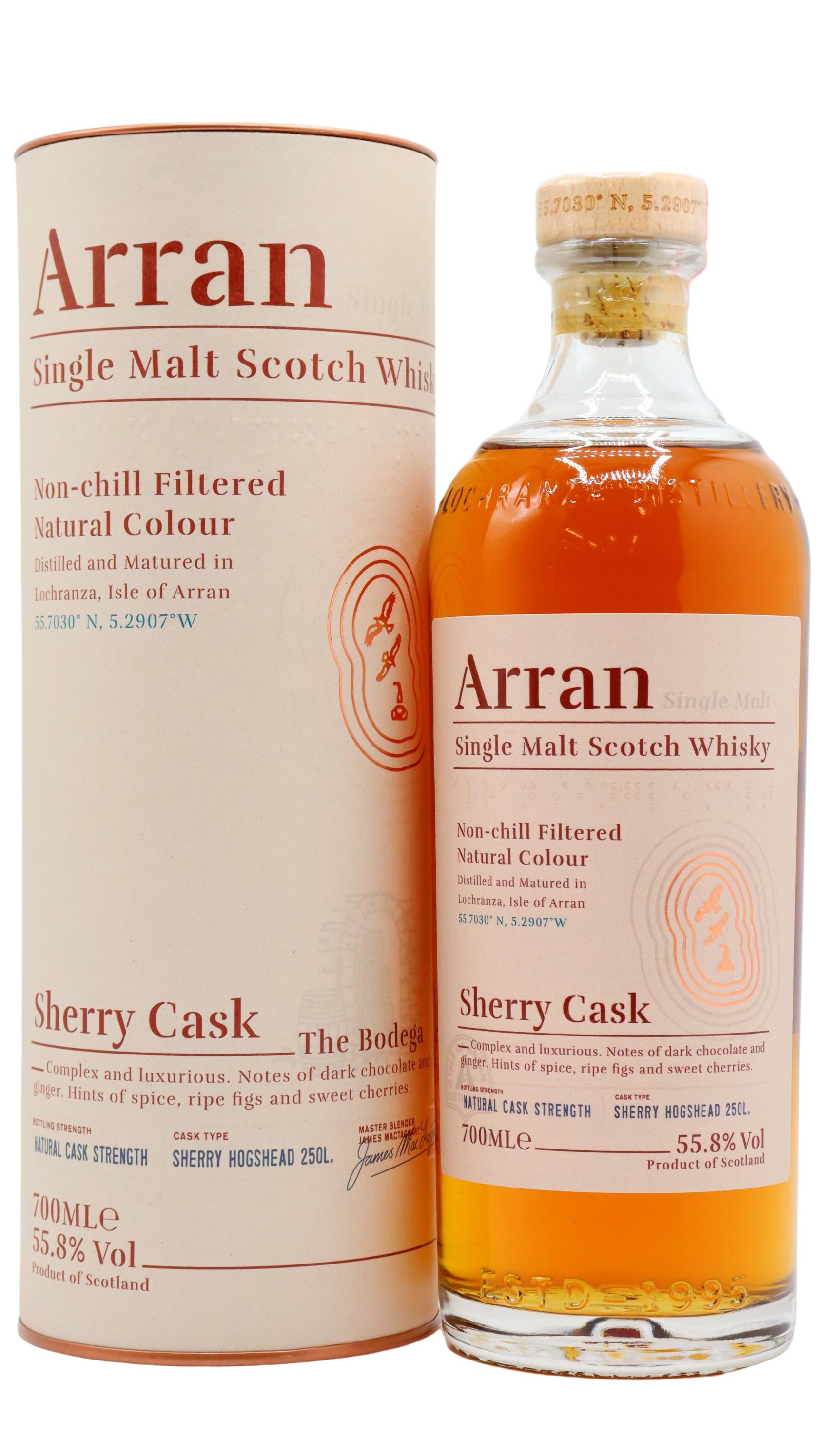
Arran Sherry Cask The Bodega
55.8% ABV · 70cl
from £58.90 4 retailers
£63.85 delivered
Save up to £15.10
Compare prices
Glenallachie 10 Year Old Cask Strength Batch 13
10 years · 59.8% ABV · 70cl
from £69.95 4 retailers
£75.90 delivered
Save up to £5.05
Compare prices
Highland Park Cask Strength No.4
64.3% ABV · 70cl
from £59.95 4 retailers
£64.99 delivered
Save up to £12.55
Compare prices
Maker's Mark Cask Strength
55.0% ABV · 70cl
from £69.95 3 retailers
£75.90 delivered
Save up to £11.05
Compare pricesReading a cask strength label
Three points to check on any bottle:
- The words “cask strength” or “batch strength”. Don’t infer cask strength from a high ABV, or from a “single cask” label: a single cask can be reduced with water before bottling.
- The ABV and batch number. The ABV is set by the casks, so it changes between batches and between single casks.
- Other label claims. Non-chill filtration and natural colour are separate statements; see chill filtration and spirit caramel.
Sources and review
Questions
What is the difference between cask strength and single cask?
What counts as a cask for Scotch whisky?
Is cask strength whisky always non-chill filtered?
About the author
