On this page
Whisky's legal definitions by country
What the law says whisky is in Scotland, England, Wales, Ireland, the EU, the USA, Japan and India, and what each definition does and does not promise.
“Whisky” is a legal word, not just a description. What it guarantees depends on where the bottle was made and where it is sold. In the UK and EU it means a spirit distilled from a cereal mash and matured for at least three years in wooden casks, bottled at 40% ABV or more with nothing added but water and caramel colouring. In Japan’s tax law and India’s food standards, the same word can cover a spirit that is mostly neutral alcohol. American law sits in between, with tight rules for bourbon and much looser ones for “spirit whisky”.
This guide sets out the definitions that govern the whisky you see on UK shelves, each linked to the law or official specification it comes from. It is a summary, not legal advice: the linked texts are the authority. For serving quantities and bottle volumes, see whisky measures and bottle sizes around the world.
The rules at a glance
On smaller screens, scroll sideways to see every column.
| Where | Legal source | Minimum age | Wood | Minimum strength | What can be added |
|---|---|---|---|---|---|
| Great Britain (any whisky) | Retained Regulation (EC) 110/2008, Annex II | 3 years | Wooden casks, 700 litres or less | 40% | Water, plain caramel |
| EU (any whisky) | Regulation (EU) 2019/787, Annex I | 3 years | Wooden casks, 700 litres or less | 40% | Water, plain caramel |
| Scotch Whisky | Scotch Whisky Regulations 2009 | 3 years, in Scotland | Oak only, 700 litres or less | 40% | Water, plain caramel |
| English Whisky | UK geographical indication, 2026 | 3 years, in England | Wooden casks, 700 litres or less | 40% | Water, plain caramel |
| Single Malt Welsh Whisky | UK geographical indication, 2023 | 3 years, in Wales | Any wood (700 litres or less under the general rule) | 40% | Water, plain caramel |
| Irish whiskey | Irish Whiskey Act 1980 and the 2014 technical file | 3 years, on the island of Ireland | Wooden casks, 700 litres or less | 40% | Water, plain caramel |
| US bourbon | 27 CFR 5.143 | None (2 years for “straight”) | New charred oak | 40% | Nothing |
| Japanese whisky | JSLMA voluntary standard, 2021 | 3 years, in Japan | Wooden casks, 700 litres or less | 40% | Plain caramel |
| Whisky in Japan’s tax law | Liquor Tax Act, Article 3 | None | None stated | None stated | Alcohol, spirits, flavouring, colouring, if whisky is at least 10% of the alcohol |
| Whisky in India | FSSAI Alcoholic Beverages Regulations 2018 | None (1 year if labelled “matured”) | Oak or other wood, or wood chips | 36% (maximum 50%) | Neutral spirit is allowed |
International Whisky Regulations Comparison
The table above illustrates the legal conflict between differing global spirits standards. In the European Union, Regulation (EU) 2019/787, Annex I, Category 2 dictates that any spirit marketed as “whisky” or “whiskey” must be aged for a minimum of three years in wooden casks of no more than 700 litres.
Under United States federal law (27 CFR § 5.143), bourbon has no minimum storage time at all, and “straight bourbon” needs only two years in new charred oak containers. A two-year-old straight bourbon can therefore be sold as “straight bourbon whiskey” in the United States, but not as whisky in Great Britain or the EU, because it has not spent three years in wood. There is no exception for imports. A spirit drink that fails the whisky definition must be sold under the name of a category it does meet, or as “spirit drink” (retained Regulation (EC) 110/2008, Article 9 in Great Britain; Regulation (EU) 2019/787, Article 10 in the EU). The UK’s 2019 agreement with the United States reserves “Bourbon whiskey” and “Tennessee whiskey” for American spirit made under US law, but it also says these whiskies “continue to be subject to all of the labelling requirements of the UK” (UK and US agreement on distilled spirits, 2019).
The baseline: Great Britain and the EU
Every whisky sold in Great Britain has to meet one general definition, whatever country made it. It comes from Regulation (EC) 110/2008, Annex II, which stayed in GB law after Brexit. Its EU replacement, Regulation (EU) 2019/787, applied in the EU only from 25 May 2021, after the transition period ended, so its product definitions did not become part of GB law (legislation.gov.uk); GB kept only the parts that already applied before then, chiefly the geographical indication rules. Whisky must be:
- distilled from a mash of malted cereals, with or without whole grains of other cereals, converted by the malt’s enzymes, with or without other natural enzymes, and fermented with yeast;
- distilled at less than 94.8% ABV, so the spirit keeps the aroma and taste of its raw materials;
- matured for at least three years in wooden casks of no more than 700 litres;
- bottled at no less than 40% ABV;
- free of added alcohol, sweetening and flavouring, with plain caramel the only additive allowed, and only for colour.
The EU’s current version, Regulation (EU) 2019/787, Annex I, says the same thing in slightly different words, and adds one rule: “single malt” may appear on a label only if the whisky was distilled entirely from malted barley at a single distillery. The GB text has no such clause, so in Great Britain the meaning of “single malt” comes from the Scotch, English and Welsh rules below.
This baseline is why the same American whiskey can be “whisky” in Kentucky and not in London: a spirit that has spent less than three years in wood cannot be sold here as whisky, whatever its home label says.
Scotland: Scotch Whisky
The Scotch Whisky Regulations 2009 are the strictest rules on this page. Scotch must be distilled at a distillery in Scotland from water and malted barley, with only whole grains of other cereals added, all mashed, converted and fermented at that distillery. It must be distilled below 94.8% ABV and matured only in Scotland, only in oak casks of no more than 700 litres, for at least three years. Nothing may be added except water and plain caramel colouring, and it must be bottled at 40% ABV or more.
The regulations define five categories, and the label must name one of them on the front of the bottle:
- Single Malt Scotch Whisky: water and malted barley only, distilled in pot stills at one distillery.
- Single Grain Scotch Whisky: from one distillery, but not a single malt or a blend. Other cereals such as wheat or maize can be used.
- Blended Malt Scotch Whisky: single malts from more than one distillery.
- Blended Grain Scotch Whisky: single grains from more than one distillery.
- Blended Scotch Whisky: one or more single malts blended with one or more single grains.
Two more rules matter to a buyer. Since 23 November 2012, Single Malt Scotch may leave Scotland only in bottles labelled for retail sale, so every single malt is bottled in Scotland (regulation 7). An age statement can refer only to the youngest whisky in the bottle (regulation 12). Region names are protected too: Highland, Lowland, Speyside, Campbeltown and Islay can appear only on whisky distilled there. “Islands” is not a protected region. Our guide to Scotland’s whisky regions covers the boundaries.
Browse: Scotch whisky, single malt, blended Scotch, blended malt, single grain.
England: English Whisky
Since 1 October 2026, “English Whisky” and “English Whiskey” have been protected names in Great Britain. Defra’s decision notice approved the English Whisky Guild’s application for a geographical indication covering “whisky made from UK cereal grain and English water, distilled in England”, and set that date for its entry on the UK register. The Scotch Whisky Association, backed by the Irish and Welsh whisky associations, appealed on 8 October 2026, mainly because English single malt may be mashed and fermented away from the distillery (Drinks Intel); appeals go to the First-tier Tribunal, and Defra had until 5 November 2026 to respond. When we rechecked on 12 November 2026, the UK register entry still showed English Whisky / English Whiskey as registered from 1 October 2026, with no change recorded since the decision notice, and we found no published Defra response or tribunal decision.
The approved specification requires English Whisky to be mashed, fermented, distilled and matured in England, aged for at least three years in wooden casks of no more than 700 litres, and bottled at 40% ABV or more. Bottling may take place outside England. The specification defines Malt English Whisky and Grain English Whisky, which can carry the descriptors “Single” or “Blended”. The first draft required copper stills for malt whisky. After objections, the approved specification requires “sufficient copper contact in the vapour path”.
Unlike Scotch, the English rules allow wood other than oak. Unlike the Welsh rules, they cover grain whisky as well as malt, and they require the grain to be grown in the UK.
Browse: English whisky, and our guide to English whisky in stock.
Wales: Single Malt Welsh Whisky
Wales protects one category, not all its whisky. Single Malt Welsh Whisky (Wisgi Cymreig Brag Sengl) is a UK geographical indication, applied for by the Welsh Whisky Association in August 2021. The specification requires:
- 100% malted barley, Welsh water and yeast, distilled at a single Welsh distillery;
- mashing, fermentation, distillation, maturation and bottling all in Wales (only the malting may happen elsewhere);
- batch distillation, in single pot stills (with or without a column) or pairs of pot stills;
- at least three years in wooden casks in warehouses in Wales, with no export for further maturation;
- at least 40% ABV.
The barley itself does not have to be Welsh, though the specification notes that many smaller distilleries use Welsh barley. Casks can be new, used or rejuvenated, and need not be oak. Welsh whisky that is not a single malt follows the general GB definition.
Browse: Welsh whisky.
Ireland and Northern Ireland: Irish whiskey
Irish whiskey has two layers of law, and both cover the whole island. The Irish Whiskey Act 1980 requires it to be distilled in the State or in Northern Ireland from a cereal mash, converted by the malt’s own enzymes, fermented with yeast and distilled below 94.8% ABV. It must then mature in wooden casks for at least three years, in warehouses in the State, in Northern Ireland, or in both.
The geographical indication’s technical file (Department of Agriculture, Food and the Marine, October 2014) adds the detail. Casks may hold no more than 700 litres, maturation must take place only on the island of Ireland, and plain caramel (E150a) is the only permitted additive. It defines four varieties:
- Pot Still Irish Whiskey: a mash of malted and unmalted barley, at least 30% of each, with up to 5% other cereals such as oats and rye, distilled in pot stills.
- Malt Irish Whiskey: malted barley, distilled in pot stills, traditionally three times, though two is allowed.
- Grain Irish Whiskey: distilled in column stills.
- Blended Irish Whiskey: a blend of two or more of the varieties above.
“Single” can be used only when all the whiskey comes from one of the first three varieties and was distilled at one distillery. The rules may change: Ireland’s Department of Agriculture consulted on the technical file from 26 June to 4 September 2026, with producers arguing for more room for other cereals (The Irish News, 24 June 2026).
Browse: Irish whiskey, single pot still.
The rest of Europe
Outside Scotland and Ireland, most European whisky follows the EU’s general definition above and nothing more. Some names carry extra protection: the 2008 regulation’s list of whisky geographical indications added Whisky español, Whisky breton (Whisky de Bretagne) and Whisky alsacien (Whisky d’Alsace) to Scotch and Irish (Regulation (EC) 110/2008, Annex III). Later registrations are recorded in the Commission’s eAmbrosia register. Each GI has its own specification, so a whisky carrying one of these names has met extra local rules on top of the EU minimum.
Browse: world whisky, French whisky.
The United States: bourbon, rye and the rest
US whisky law lives in 27 CFR 5.143, and it is built differently from Europe’s. “Whisky” in general is a distillate of a fermented grain mash, distilled below 95% ABV, stored in oak barrels and bottled at 40% ABV or more. There is no minimum storage time. Below that sits a long list of types. The ones you are most likely to see in a UK shop:
- Bourbon: at least 51% corn, distilled at 160 proof (80% ABV) or less, and stored in new charred oak barrels entered at 125 proof (62.5%) or less. No colouring, flavouring or neutral spirit may be added. The name may be used only for whisky distilled and aged in the United States.
- Rye, wheat and malt whisky: at least 51% of the named grain, with the same distillation and barrel limits as bourbon. Unlike bourbon, these types may contain permitted colouring, flavouring or blending materials.
- Corn whisky: at least 80% corn, and it need not be stored in wood at all.
- Straight whisky: stored in oak for at least two years. Straight bourbon, rye, wheat and malt use new charred oak; straight corn uses used or uncharred new oak, and straight American single malt may use those or new charred oak. Straight whisky generally does not permit colouring, flavouring or blending materials, but straight American single malt may contain caramel colouring if disclosed on the label.
- Blended whisky: at least 20% straight whisky on a proof-gallon basis. The balance may include whisky, neutral spirits or both; neutral spirits can account for up to 80% on that basis.
- Spirit whisky: a mixture of neutral spirits and at least 5% whisky on a proof-gallon basis; the straight whisky component must be less than 20% on that basis.
- American single malt whisky: 100% malted barley, distilled at one US distillery and matured in the US in oak barrels of no more than 700 litres. Caramel colouring is allowed only if the label discloses it, including in the straight designation. This is the newest type: TTB’s final rule took effect on 19 January 2025.
Tennessee law sets additional requirements for whiskey labelled “Tennessee Whiskey”, including production in Tennessee and, generally, filtration through maple charcoal before ageing (the Lincoln County Process). An exemption applies to one distillery; a Tennessee attorney general’s opinion discusses the exemption and its constitutionality.
The blended and spirit whisky percentages above use a proof-gallon basis, which measures alcohol content rather than just the liquid volume. See 27 CFR 5.143(c) for the full definitions and TTB’s explanation of proof gallons.
Remember the UK baseline. An American whiskey sold here as whisky must also have spent three years in wood, even where US law needs less.
Browse: American whiskey, bourbon, rye, Kentucky, Tennessee.
Japan: a tax definition and an industry standard
Japan has two definitions, and they are far apart. The legal one is in the Liquor Tax Act (Act No. 6 of 1953), Article 3. It defines whisky as a spirit distilled below 95% ABV from malted grain and water, or from grain converted by malted grain. It then allows alcohol, other spirits, flavouring, colouring or water to be added, provided the whisky makes up at least 10% of the total alcohol. The Act sets no minimum age, says nothing about casks, and does not require the whisky to come from Japan.
The industry filled the gap. The Japan Spirits & Liqueurs Makers Association’s Standards for Labeling Japanese Whisky, established on 12 February 2021 and effective from 1 April 2021, reserve “Japanese whisky” for whisky that:
- is made only from malted grains, other cereal grains and water, with the water extracted in Japan (the standard does not require Japanese grain), and always includes malted grain;
- is saccharified, fermented and distilled at a distillery in Japan, below 95% ABV;
- is matured in Japan for at least three years in wooden casks of no more than 700 litres;
- is bottled in Japan at 40% ABV or more, with plain caramel the only colouring allowed.
Whisky that does not qualify may not use “Japan whisky”, “Japanese-style” or translations of the term. Without a clear statement, it also may not use names of people that evoke Japan, Japanese place names, mountains or rivers, the Japanese flag or an era name. Products already on sale had until 31 March 2024 to comply. The standard is voluntary: it binds the association’s members, not the law. In March 2026, Japan’s National Tax Agency told a parliamentary committee it was working with industry towards a legal definition (Nomunication, 19 March 2026). No timetable has been given.
Every Japanese whisky sold in the UK must still meet the GB definition, which already rules out the tax law’s 10% blends. Our guide to Japanese whisky prices in the UK covers what is on sale.
Browse: Japanese whisky.
India: whisky that may be mostly neutral spirit
India’s rules are in the Food Safety and Standards (Alcoholic Beverages) Regulations, 2018, as amended to December 2025. They define whisky as a spirit made by distilling a fermented extract of malted cereal grains, or by “using neutral grain spirit or rectified grain spirit, or neutral spirit of agricultural origin, or their mixture”. Neutral spirit in these regulations can be made from cereals, fruit, vegetables or molasses. Other rules:
- Single malt whisky: malted barley only, distilled in pot stills at a single distillery.
- Single grain whisky: malted or unmalted grain from a single distillery.
- Blended malt or blended grain whisky: at least 2% malt or grain whisky mixed with neutral or rectified spirit.
- Maturation: none is required. A drink labelled “matured” must have spent at least a year in oak or other wood, or with wood chips.
- Age: an age stated with “aged” must refer to the youngest spirit.
- Strength: whisky must be between 36% and 50% ABV.
So much of what India drinks as whisky would not count as whisky in the UK. Indian single malts sold here as whisky must meet the GB definition like any other import, and the regulations’ own single malt category (malted barley, pot stills, one distillery) sits close to it. Our guide to Indian whisky lists what UK shops have.
Browse: Indian whisky.
Elsewhere, briefly
- Canada: the Food and Drug Regulations require whisky sold for consumption in Canada to be aged at least three years in small wood, with exceptions for bourbon and Tennessee whiskey and separate rules for flavourings. Age claims on Canadian whisky follow section B.02.020(2) and (3); its first subsection, the old definition, was repealed in 2024. Since 18 December 2024 the definition of Canadian whisky itself sits in Volume 2 of the Canadian Food Compositional Standards, which the regulations incorporate by reference (CFIA). See Canadian whisky.
- Australia: section 77FI of the Excise Act 1901 requires whisky made in Australia to be matured in wood for at least two years before delivery from excise control. See Australian whisky.
What a legal definition does not promise
A definition sets a floor, not a flavour. None of these laws says how a whisky tastes, and none makes an older or stricter category better. They do let you read a label with some confidence: “Single Malt Scotch Whisky” tells you the grain, the still, the distillery count and the country of bottling, while a bare “whisky” from a market with looser rules tells you much less. Two related questions have their own guides: what an age statement means, and what caramel colouring (E150a) does.
How we checked
We read the laws and specifications linked in each section, including UK and EU legislation, Defra’s specifications, the Irish Act, the US Code of Federal Regulations, Japan’s Liquor Tax Act and industry standard, and India’s consolidated regulations. We checked the sources on 26 October 2026 and rechecked them on 27 October 2026. The US straight American single malt and blend descriptions were checked against 27 CFR 5.143(c) on 6 November 2026. On 12 November 2026 we rechecked the GB and EU whisky definitions on legislation.gov.uk and EUR-Lex, the “spirit drink” rule for spirits that fail them, the UK and US spirits agreement, the Scotch Whisky Regulations 2009 (regulations 3, 7, 10 and 12), the bourbon rules in 27 CFR 5.143, Canada’s Food and Drug Regulations, the JSLMA standard and the UK register entry for English Whisky. Laws and specifications can change.
Blended whisky to compare
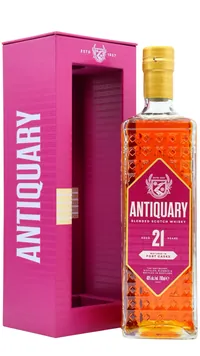
Antiquary 21 Year Old Port Cask Matured
21 years · 40.0% ABV · 70cl
from £88.77 shelf price 5 retailers
£93.72 delivered
Price gap up to £19.23
Compare prices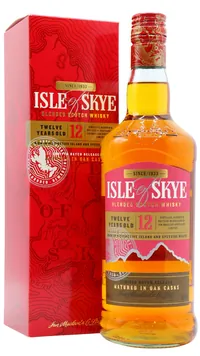
Isle of Skye 12 Year Old Blend
12 years · 40.0% ABV · 70cl
from £30.47 shelf price 5 retailers
£35.42 delivered
Price gap up to £4.48
Compare prices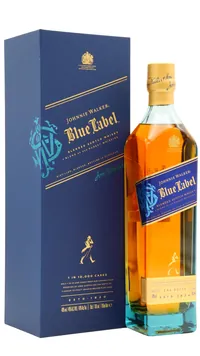
Johnnie Walker Blue Label
40.0% ABV · 70cl
from £137.95 shelf price 5 retailers
£137.95 delivered
Price gap up to £27.05
Compare prices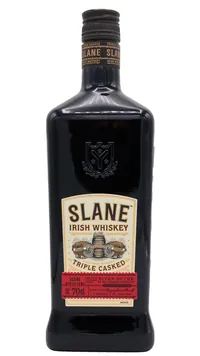
Slane Irish Whiskey
40.0% ABV · 70cl
from £24.60 shelf price 5 retailers
£29.10 delivered
Price gap up to £7.35
Compare pricesQuestions
Does whisky have to be aged for three years?
Is it whisky or whiskey in law?
Can Indian whisky made from molasses be sold as whisky in the UK?
Cite this page
John Fegan (26 October 2026). "Whisky's legal definitions by country". Uisge Beatha. Updated 12 November 2026. https://uisgebeatha.co.uk/guides/whisky-legal-definitions/. Accessed [date you read it].
Wikitext
<ref>{{cite web |title=Whisky's legal definitions by country |url=https://uisgebeatha.co.uk/guides/whisky-legal-definitions/ |website=Uisge Beatha |author=John Fegan |date=26 October 2026 |access-date=[date you read it]}}</ref>Where a point is covered by a paper, statute or official record named in the sources note, cite that first. Cite this page for its tables and worked explanations.
About the author
