On this page
Workhorse malts: why independent bottlers rule at auction
At auction, most Glenburgie, Linkwood and Ben Nevis comes from independent bottlers. Which malts, which bottlers, and what it means for price.
Some distilleries put almost all of their single malt out under their own name. Glenfiddich and Balvenie are the obvious examples: at auction, independent bottlings are about 1% of their lots. Others work mainly for blends, and for them the picture flips. Most of the Glenburgie, Linkwood and Ben Nevis that changes hands at auction was bottled by someone other than the distillery.
An independent bottler buys casks from a distillery, or from a broker, and bottles them under its own label. Gordon & MacPhail, Cadenhead’s, Signatory Vintage, the Scotch Malt Whisky Society and Douglas Laing are the names you see most at auction. Our guide to independent whisky bottlers explains how it works and what the labels mean.
The figures here are sold lots at Scotch Whisky Auctions, Whisky Auctioneer and Whisky Hammer, from May 2011 to October 2026. The evidence map sets out what they cover and what they leave out.
Which malts come mostly from independent bottlers
These are the ten operating malt distilleries whose sold lots were most often independent bottlings, among those with at least 2,000 lots. Each share is a lower bound. When a lot names no bottler, it counts as an official bottling by default, and the “No bottler named” column shows how many lots that applies to: the true independent share could be higher by up to that much.
| Distillery | Lots sold | Independent bottlings (at least) | No bottler named | Median official | Median independent | Leading independent bottlers |
|---|---|---|---|---|---|---|
| Glenburgie | 3,319 | 85% | 13% | £78 | £110 | Gordon & MacPhail, Cadenhead, Scotch Malt Whisky Society |
| Glentauchers | 2,502 | 84% | 16% | £60 | £69 | Cadenhead, Gordon & MacPhail, Scotch Malt Whisky Society |
| Miltonduff | 3,664 | 76% | 22% | £50 | £121 | Cadenhead, Gordon & MacPhail, Scotch Malt Whisky Society |
| Benrinnes | 4,718 | 73% | 19% | £80 | £75 | Cadenhead, Scotch Malt Whisky Society, Adelphi |
| Glenlossie | 2,404 | 73% | 21% | £62 | £95 | Scotch Malt Whisky Society, Cadenhead, Gordon & MacPhail |
| Ardmore | 3,778 | 71% | 23% | £35 | £60 | Scotch Malt Whisky Society, Gordon & MacPhail, Cadenhead |
| Linkwood | 6,006 | 69% | 24% | £140 | £90 | Gordon & MacPhail, Scotch Malt Whisky Society, Cadenhead |
| Teaninich | 3,346 | 65% | 25% | £150 | £55 | Global Whisky, Cadenhead, Adelphi |
| Dailuaine | 3,732 | 64% | 24% | £75 | £65 | Scotch Malt Whisky Society, Cadenhead, Global Whisky |
| Ben Nevis | 8,476 | 64% | 24% | £111 | £140 | Signatory, Thompson Bros, Cadenhead |
Sold lots at Scotch Whisky Auctions, Whisky Auctioneer and Whisky Hammer, May 2011 to October 2026. Ranked by the share of lots that were independent bottlings, among operating malt distilleries with at least 2,000 sold lots. A lot counts as independent when its bottler is named and is not the distillery or its owner. "No bottler named" is the share counted as official only because the record names no bottler, so the independent share is a lower bound and the true share could be higher by up to that much. Medians need at least 30 lots. Release sm-3935076b45.
Most of these distilleries belong to groups that make blends: Diageo, which owns Johnnie Walker, and Chivas Brothers, which owns Chivas Regal. When a distillery’s main job is supplying blends, the single malt that reaches drinkers often comes through independent bottlers instead. Two familiar Diageo malts rank lower but are still more often independent than official: Mortlach, at 56% independent, and Caol Ila, at 53%, which supplies smoky malt for Johnnie Walker.
Who bottles them
A handful of bottlers account for most of these lots. Cadenhead’s is in the top three for every distillery in the table, and the Scotch Malt Whisky Society for all but two. Gordon & MacPhail, an Elgin merchant founded in 1895, has more Glenburgie and Linkwood lots than any other independent bottler. Signatory Vintage, founded in 1988 and best known for single casks labelled with the cask number and dates, leads for Ben Nevis, with Thompson Bros, the brothers behind Dornoch distillery, second. Douglas Laing, a Glasgow bottler founded in 1948, is in the top five for Dailuaine.
Bottler names are joined across the three houses’ spellings (“SMWS” and “Scotch Malt Whisky Society” count as one bottler), and companies that only sound alike, such as Douglas Laing and Hunter Laing, are kept apart. The bottler pages list what is in UK shops now.
Does an independent bottling cost more?
Not as a rule. For some of these distilleries the typical independent bottling sold for less than the typical official one: Linkwood independent bottlings had a median of £90 against £140 for official ones, and Caol Ila £85 against £110. For others it sold for more: Ben Nevis £140 against £111, and Mortlach £140 against £120. The table above gives both medians for each distillery.
The medians mix very different bottles, so read them as a guide to what a typical lot costs, not as a like-for-like price. An official Caol Ila 12 and a 30-year-old single cask from an independent bottler both count, and the mix of ages and casks differs between official and independent bottlings, so the effect of the label cannot be separated from the effect of what was bottled. What the figures do show is that an independent label is not a reason on its own to expect a higher or a lower price: it depends on the distillery.
We have not compared these auction shares with what UK shops stock now. A shop’s shelf on one day and fifteen years of auction sales measure different things, and neither tells you how much a distillery makes or how many people want its whisky.
Where to look
If you want to try one of these malts, the independent bottlings are where most of the choice is. The distillery pages list what the UK shops we check have in stock now, official and independent, with today’s prices: Glenburgie, Linkwood, Ben Nevis, Mortlach and Caol Ila. Each page also shows how the distillery’s bottles have sold at auction.
If you bid on one at auction, add buyer’s commission, VAT and delivery to the hammer price first; buying whisky at auction vs retail shows the sums. Use recent results rather than 2021 or 2022 ones, because the same bottlings of many brands sell for less now (the Scotch correction). And allow for the cask: a sherry cask lot typically sells for more than a bourbon cask lot of the same age, even among independent bottlings (the sherry cask auction premium).
Limitations
- A lower bound. Independent shares count only lots whose bottler is named; Whisky Hammer’s results name no bottler, so its lots count as independent only when the title names one.
- Three houses. Other auction houses and private sales are not included, and prices are hammer prices before fees.
- Thin figures left out. Distilleries with fewer than 2,000 sold lots are not ranked, and a median needs at least 30 lots.
The auction data page explains the method in full and has every table to download.
Sources and review
Data: sold lots at Scotch Whisky Auctions, Whisky Auctioneer and Whisky Hammer, May 2011 to October 2026 (secondary-market release sm-3935076b45). The auction data page sets out the method and its limits.
- Distilleries: sold lots, official and independent bottlings (CSV, 188 rows)
- Leading independent bottlers per distillery (CSV, 782 rows)
- Release manifest: houses, coverage, columns and checksums (JSON)
Cite as: Uisge Beatha, secondary-market auction release sm-3935076b45 (sold lots at Scotch Whisky Auctions, Whisky Auctioneer and Whisky Hammer, May 2011 to October 2026), https://uisgebeatha.co.uk/data/whisky-auction-data/.
Licence: the release tables are CC BY 4.0. Credit "Uisge Beatha (uisgebeatha.co.uk), CC BY 4.0" with a link to the auction data page.
Free to download and reuse under Creative Commons Attribution 4.0 (CC BY 4.0): credit "Uisge Beatha (uisgebeatha.co.uk), CC BY 4.0" with a link to the methodology page. The tables hold aggregates only: no lot records, lot titles from a single sale or buyer information. Spotted an error? See corrections and press or email team@uisgebeatha.co.uk with the subject line Correction, and give the release id, the table and the row; confirmed corrections go into a new release.
Independent bottlings to compare
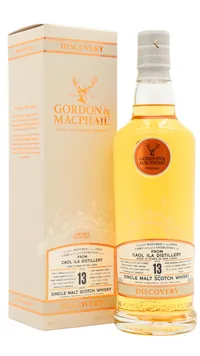
Discovery Caol Ila 13 Year Old Single Malt
13 years · 43.0% ABV · 70cl
from £52.50 shelf price 5 retailers
£57.00 delivered
Price gap up to £14.50
Compare prices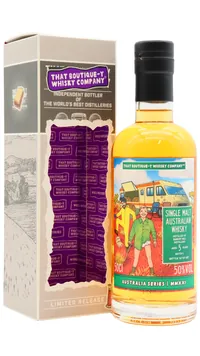
Bakery Hill 5 Year Old Australia Series That Boutique-y Whisky Company Limited Edition 50cl
5 years · 50.0% ABV · 50cl
from £89.95 shelf price 4 retailers
£95.90 delivered
Price gap up to £49.00
Compare prices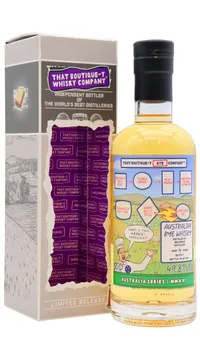
Belgrove 4 Year Old Rye Australia Series That Boutique-y Rye Company Limited Edition 50cl
4 years · 49.8% ABV · 50cl
from £138.95 shelf price 4 retailers
£138.95 delivered
Price gap up to £1.00
Compare prices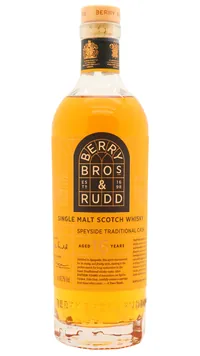
Berry's 16 Year Old Speyside Traditional Cask Single Malt Whisky
16 years · 48.2% ABV · 70cl
from £94.90 shelf price 4 retailers
£99.40 delivered
Price gap up to £8.05
Compare pricesQuestions
Which distilleries are mostly sold as independent bottlings at auction?
Do independent bottlings cost more than official bottlings at auction?
Cite this page
John Fegan (2 November 2026). "Workhorse malts: why independent bottlers rule at auction". Uisge Beatha. Updated 12 November 2026. https://uisgebeatha.co.uk/guides/workhorse-malts-independent-bottlers/. Accessed [date you read it].
Wikitext
<ref>{{cite web |title=Workhorse malts: why independent bottlers rule at auction |url=https://uisgebeatha.co.uk/guides/workhorse-malts-independent-bottlers/ |website=Uisge Beatha |author=John Fegan |date=2 November 2026 |access-date=[date you read it]}}</ref>Where a point is covered by a paper, statute or official record named in the sources note, cite that first. Cite this page for its tables and worked explanations.
About the author
