Phenolic Compounds in Whisky: Guaiacol and Eugenol
How phenols, cresols, guaiacol and eugenol shape the smoky, medicinal and spicy flavours found in single malt whisky, and what label ppm really means.
The smoky, medicinal, clove-like and barbecue notes in whisky, especially in peated malts and whiskies from heavily charred casks, come largely from one family of chemical compounds: phenols.
They matter at very low concentrations, because the nose is highly sensitive to many of them. Some arrive with peat smoke during malting; others come from oak during maturation. The result is that two whiskies can both be called smoky while offering rather different accounts of the fire.
Phenols and cresols: peat smoke and medicinal notes
The smoke in peated Scotch starts at the maltings. When germinated barley is dried in a kiln over burning peat, the smoke leaves phenolic compounds on the damp grain (Ardbeg).
The main compounds behind the sharper, medicinal side of peat smoke are:
- Phenol: sharp, medicinal, disinfectant-like notes.
- Cresols (ortho-, meta- and para-cresol): methyl phenols with tarry, medicinal, sticking-plaster aromas, often linked to the medicinal style of Islay malts such as Laphroaig and Ardbeg.
- Xylenols: heavier, oily, tarry smoke notes.
Malt ppm against the glass
Peat levels are quoted as parts per million (ppm) of phenols, measured on the malted barley, not in the whisky. Ardbeg says its malt is peated to a minimum of 55 ppm (Ardbeg), and Bruichladdich says Octomore releases have run from 80 ppm, its minimum for the range, to over 300 ppm (Bruichladdich).
The figure on the malt is not what reaches the glass. It is a measurement taken at the start of production, before mashing, fermentation, distillation and the cask have had their say. Phenols are lost in mashing, fermentation and the distillation cut. Torabhaig publishes figures for Cnoc Na Moine, but its current page labels the higher figure as spirit phenols, while an earlier capture described it as in-grain. We do not treat the two descriptions as equivalent without clarification (Torabhaig). Phenol levels also fall during maturation (Bruichladdich), which is one reason an older peated whisky often tastes less smoky than a young one from the same distillery. Our guide to peat and ppm explains why.
Guaiacol: sweet, savoury smoke
While phenol and the cresols give the sharper, medicinal side of smoke, guaiacol (2-methoxyphenol) and its relative 4-methylguaiacol give smokier, more savoury notes: wood smoke, smoked bacon, roasted coffee and toasted oak.
Guaiacol reaches whisky by two routes:
- Peat smoke: Guaiacol and related methoxyphenols form when the lignin in peat breaks down in the heat of the kiln fire, and peats differ in how much lignin they carry: Scotch Whisky Research Institute work found Islay peat richer in lignin derivatives than Orkney peat (Harrison and Priest, 2009). In general, lignin gives off more methoxyphenols such as guaiacol at lower burning temperatures, and more simple phenol and cresols as the heat rises, so how the peat burns affects the mix.
- Cask toasting and charring: When coopers toast and char a cask, the heat breaks down the lignin in the oak and forms guaiacol and other phenols. That is why unpeated whiskies from heavily charred casks, bourbon included, can still have a smoky note.
Eugenol: clove and warm spice
Eugenol (4-allyl-2-methoxyphenol) is the compound behind the smell of cloves, and it gives whisky clove, allspice and warm-spice notes.
Most of the eugenol in whisky comes from the oak, formed as the wood’s lignin breaks down during seasoning and toasting and then drawn out during maturation. Some is also found among the phenols in peat smoke. European oak is often reported to give more eugenol than American oak, but studies differ, and the toasting of the cask matters as much as the species. Together with vanillin, another lignin product, eugenol is part of the spiced, fruitcake-like profile that sherry-cask malts are known for.
Summary of key whisky phenols
On smaller screens, scroll sideways to see every column.
| Compound | Main source | Aroma | Where you find it |
|---|---|---|---|
| Phenol and cresols | Peat smoke | Medicinal, antiseptic, tarry, damp earth | Peated Islay malts (Laphroaig, Ardbeg, Caol Ila) |
| Guaiacol | Peat smoke and charred oak | Wood smoke, roasted coffee, bacon, barbecue | Peated malts and heavily charred casks |
| Eugenol | Mostly oak; some in peat smoke | Clove, allspice, warm spice | Many oak-matured whiskies, often sherry-cask malts |
| Vanillin | Lignin breakdown in toasted oak | Vanilla, cream, custard | First-fill bourbon casks and virgin oak |
Comparing peated and spiced whiskies
To compare these compounds in the glass, try a peated malt alongside a sherry-cask whisky:
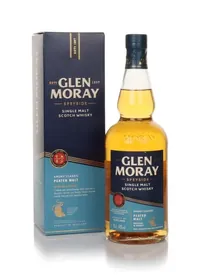
Glen Moray Peated - Elgin Classic Single Malt Whisky
40.0% ABV · 70cl
from £26.04 shelf price 1 retailer
£30.99 delivered
Compare prices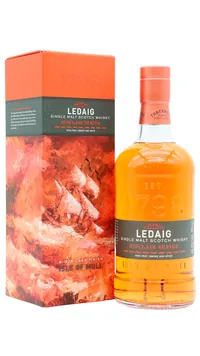
Ledaig Sinclair Series Rioja Cask Finish
46.3% ABV · 70cl
from £26.92 shelf price 4 retailers
£31.87 delivered
Price gap up to £19.08
Compare prices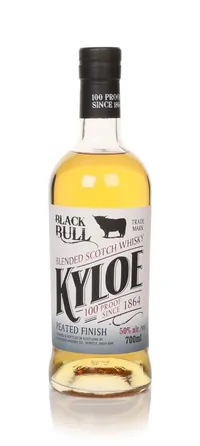
Black Bull Kyloe Peated (Duncan Taylor) Blended Whisky
50.0% ABV · 70cl
Peated
from £27.00 shelf price 1 retailer
£31.95 delivered
Compare prices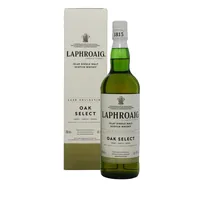
Laphroaig Select
40.0% ABV · 70cl
from £28.50 shelf price 3 retailers
£33.45 delivered
Price gap up to £9.68
Compare prices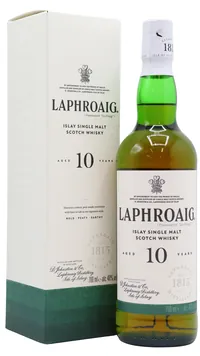
Laphroaig Islay Single Malt Scotch 10 Year Old Whisky
10 years · 40.0% ABV · 70cl
from £32.00 shelf price 3 retailers
£36.95 delivered
Price gap up to £10.90
Compare prices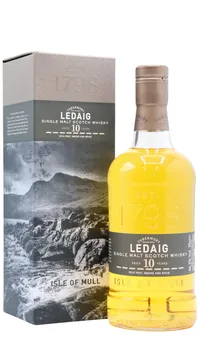
Ledaig 10 Year Old
10 years · 46.3% ABV · 70cl
from £32.50 shelf price 5 retailers
£37.45 delivered
Price gap up to £15.45
Compare pricesSources and review
About the author
